How to Win Friends and Influence People: Key Lessons from a Classic Self-Help Book
The self-help genre is thousands of years old. From the religious leaders, the stoics, world and military leaders, many individuals have written these kinds of books. But most of these books are philosophical and are meant for interpretation.
They are heavy in detail, and different people interpret the ideas differently. This changed in 1936, when a man called Dale Carnegie published "How to Win Friends and Influence People," a self-help book that had practical advice suitable for anyone.
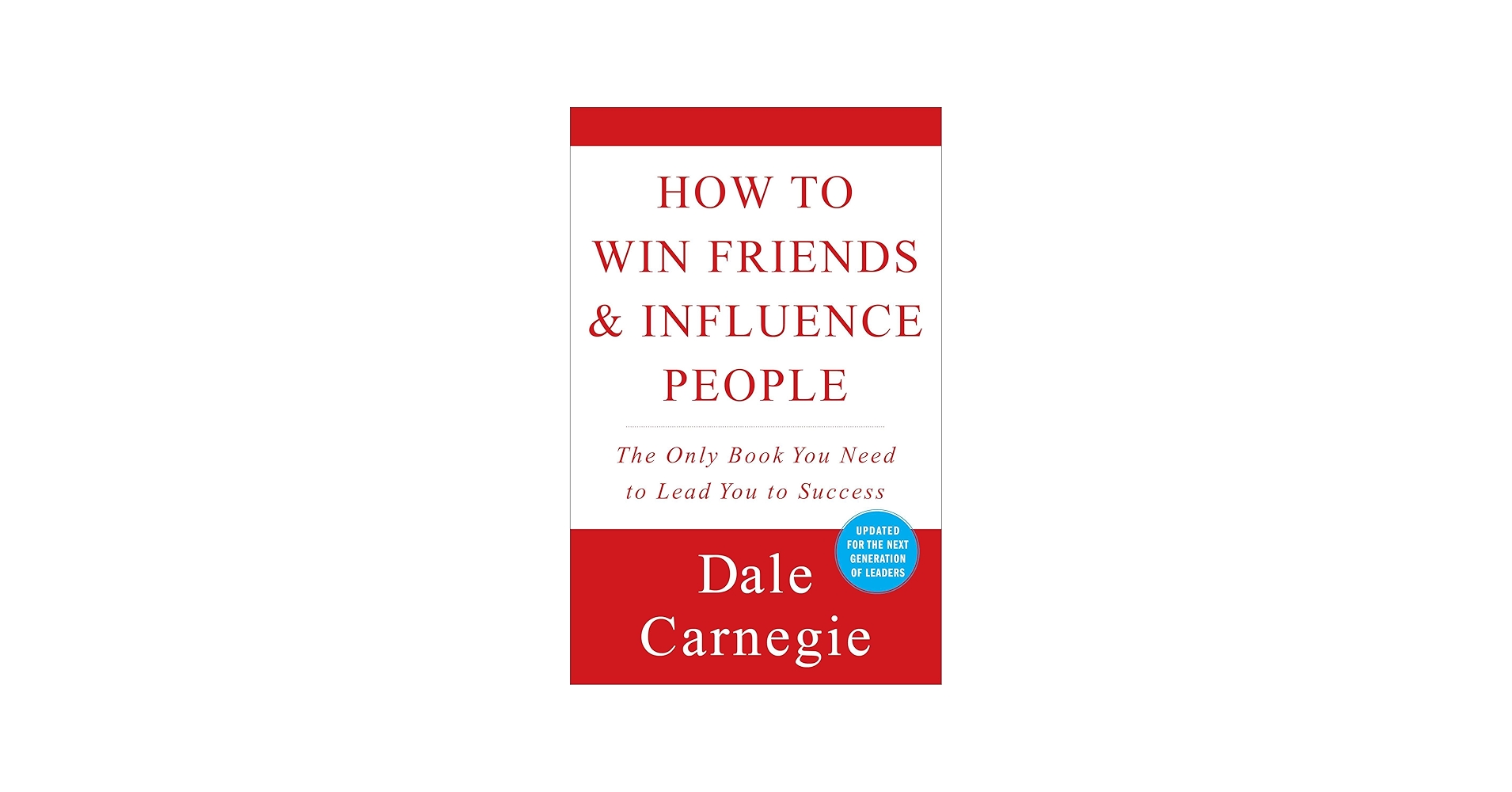 DaleCarnegie and the Story of this book
Dale Carnegie was born into poverty in a farm in Missouri and had to wake up at 3am in the morning to milk cows and walk a mile to school. He had to endure much struggle to get education. But he was talented in something important, public speaking.
He was confident in front of people and was good at controlling crowds. He joined debates in his school days, often practicing speeches while milking cows, and later even won a debate championship. These skills proved useful in trade, and he soon left the farm to work as a salesman, selling various kinds of goods.
He was also studying in a college to become a teacher at this time and eventually decided to give up the job he hated to take up teaching at a night school. He realized public speaking was his best skill and began teaching it a Y. M. C. A.
It grew popular very fast, and he could help salesmen and other professionals from various backgrounds to improve their relationships and business lives by simply improving their communication. And since he couldn't find any book on human relations at the time, he wrote a textbook for his class called How to Win Friends and Influence People. This book was later published in 1936 as a self-help book and remains one of the most sold books of all time.
The Effort Put Into Writing This Book
Despite being a great speaker, Dale Carnegie wasn't overconfident. He had to put in a lot of effort and time to write this book.
He writes in the introduction to this book that:
"In preparation for this book, I read everything that I could find on the subject - everything from newspaper columns, magazine articles, records of the family courts, the writings of the old philosophers and the new psychologists. In addition, I hired a trained researcher to spend one and a half years in various libraries reading everything I had missed, plowing through erudite tomes on psychology, poring over hundreds of magazine articles, searching through countless biographies, trying to ascertain how the great leaders of all ages had dealt with people. We read their biographies; we read the life stories of all great leaders from Julius Caesar to Thomas Edison. I recall that we read over one hundred biographies of Theodore Roosevelt alone."
What Does the Book Teach?
The book is divided into four parts, and each part has its own set of principles. (The original edition had six parts, but two of the latter parts were removed by the Carnegie estate as they were declared outdated. Most people now get the 1981 revised edition with four parts, and although chapter titles and orders may change depending on the publisher, the principles remain the same).
Photoby Chang Duong on Unsplash
The author provides clear examples from various walks of life and history to prove the truth in his principles.
The parts are:
1. Fundamental Techniques in Handling People
2. Six Ways to Make People Like You
3. Win People to Your Way of Thinking
4. Be a Leader: How to Change People Without Giving Offence or Arousing Resentment
The book is organized in a logical order, starting with simple ideas about human behavior and moving toward more advanced lessons on leadership. This gradual progression helps motivate readers and keeps them interested throughout the book.
1. Fundamental Techniques in Handling People
The three principles in this section outline simple fixes in the daily approach towards others. This includes avoiding criticism, condemnation, and complaints of people, showing sincere appreciation, and creating an eager desire for cooperation. The author provides examples from different professions and history to support these ideas.
2.Six Ways to Make People Like You
Carnegie builds on the principles stated in the first section here, adding more principles that make people like and trust each other. A few examples are being genuinely interested in what others want, smiling, listening well, etc.
Photoby Count Chris on Unsplash
3. How to Win People to Your Way of Thinking
The previous sections included a lot about character and behavior, but this section focuses on enhancing communication skills to improve relationships.
Some of the most popular principles from this section are:
"The only way to get the best of an argument is to avoid it"
"Show respect for the other person's opinions. Never say, 'You're wrong,'"
"Try honestly to see things from the other person's point of view."
4. Be a Leader
Photoby Jehyun Sung on Unsplash
The author says that it is a part of the leader's job is to change his people's attitude and behavior, especially when there's some fault. He moves from practical advice to change the individual self to changing others and improving cooperation.
This includes beginning with praise and honest appreciation, calling attention to people's mistakes indirectly, talking about their mistakes before criticizing the other person, letting the other person save face, and using encouragement and making the fault seem easy to correct.
Everyone Should Read It
How to Win Friends and Influence People is often recommended not only as a book to read once, but as a guide to revisit regularly. In the introduction, the author himself explains that principles of human behavior are easy to forget without practice and reflection.
The book focuses on developing long-term habits that improve communication and influence. Because these skills are rarely taught formally, the book filled an important gap by presenting practical methods for social and professional success. Its continued popularity over many decades shows its lasting relevance.