The Evolution of Land Rover From Farm Vehicle to Luxury SUV Icon.
For more than seven decades, Land Rover has remained one of the most respected names in the automobile industry. Known for its powerful off road vehicles, premium luxury SUVs, and unmatched durability, Land Rover has built a global reputation that combines adventure, engineering excellence, and prestige. From its beginnings as a simple utility vehicle designed for farmers after World War II to becoming one of the world’s leading luxury SUV manufacturers, the story of Land Rover is a remarkable journey of innovation and transformation.
The Origins of Land Rover
The history of Land Rover began in the United Kingdom shortly after the end of the Second World War. Britain was facing serious economic difficulties, and industries were searching for new products that could help rebuild the country’s economy. At the time, the Rover Company (British automobile manufacturer) mainly produced luxury cars but needed a new direction to survive in the challenging post war environment.
Two brothers, Maurice Wilks and Spencer Wilks, played a major role in the birth of Land Rover. Maurice Wilks, who was Rover’s chief engineer, used an old military Jeep on his farm in Anglesey, Wales. He realized that farmers and workers needed a strong, reliable, and versatile vehicle similar to the wartime Jeep but designed for civilian use. Inspired by this idea, the Wilks brothers designed a new utility vehicle that could be used in agriculture, construction, military operations, and transportation in rough environments. Their goal was to create a practical vehicle capable of operating in difficult terrain while remaining simple to maintain.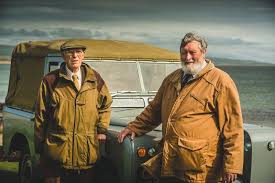
The Birth of the First Land Rover
In 1948, the first Land Rover was officially introduced at the Amsterdam Motor Show. The vehicle, later known as the Series I, immediately gained attention because of its unique design and impressive capability. One of the most interesting features of the original Land Rover was its aluminum body. Steel was expensive and limited after the war, so the company used aluminum alloy, which was lightweight and resistant to rust. This decision later became one of the defining characteristics of early Land Rover vehicles.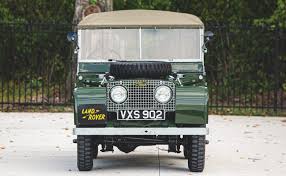
The first model featured four wheel drive, a simple interior, and exceptional off road performance. It was originally intended as a temporary product for the Rover Company, but its popularity quickly exceeded expectations. Farmers, explorers, military organizations, and emergency services appreciated the vehicle’s toughness and reliability. Soon, Land Rover vehicles were being exported around the world. Their ability to handle deserts, forests, mountains, rivers, and muddy roads made them highly valuable in countries with challenging terrain.
The Technology Leap From Analogue Muscle to Digital Intelligence
The true core of Land Rover’s evolution lies in its staggering technological transformation. Over seventy plus years, the brand transitioned from raw mechanical resilience to cutting edge electronic intuition.
1. The Analogue Era (1948–1969)
The original Series I was a masterpiece of mechanical simplicity. Technology in 1948 meant bypass oil filters, simple carburetors, and a rugged leaf spring suspension system carried over from traditional truck engineering. Early models utilized a unique mechanical freewheel mechanism for its four wheel drive system, giving way to simple manual levers that mechanically locked the axles. Drivers relied entirely on physical muscle, high to low range mechanical transfer boxes, and basic engineering to traverse obstacles.
2. The Comfort and Capability Revolution (1970–2004)
With the arrival of the Range Rover in 1970, Land Rover completely disrupted the market by introducing coil spring suspension. This shifted off road technology away from rigid, bone jarring leaf springs toward a system that offered long travel wheel articulation for rough terrain while maintaining a smooth ride on tarmac. This era also saw the debut of permanent four wheel drive. By the late 1990s, Land Rover began experimenting with early electronic driver aids, introducing Hill Descent Control (HDC) and Electronic Traction Control (ETC), which used the vehicle's braking system to simulate locking differentials.
3. The Digital Era Terrain Response(2005–Present)
The landmark technological shift occurred in 2005 with the launch of Land Rover’s patented Terrain Response system. For decades, off roading required expert driver knowledge to manually toggle gears, differentials, and speeds. Terrain Response changed this by consolidating the vehicle’s engine response, gearbox programming, air suspension height, and traction control into a single dial. Today, this has evolved into Terrain Response 2 Auto. Rather than requiring the driver to manually select modes like Sand, Mud, or Rock Crawl, intelligent on board sensors automatically analyze the ground beneath the tires hundreds of times per second. The vehicle proactively configures its own center and rear electronic locking differentials, air suspension, and throttle response.
4. Next-Gen Off-Road Innovations
Modern Land Rovers boast technologies that seemed like science fiction during the Series I era.
- All-Terrain Progress Control (ATPC) - Functions as a low-speed, off road cruise control. The driver focuses solely on steering while the computer manages precise brake and throttle modulations over rocks or mud.
- Clear Sight Ground View (Transparent Bonnet) - Uses external cameras to project a virtual, real time feed of the terrain directly beneath the front engine bay onto the central touchscreen, making hidden rocks or ruts visible.
- Pivi Pro Infotainment & OTA Updates - A hyper connected digital cockpit that features machine learning, predictive navigation, and Over The Air (OTA) software updates keeping the vehicle’s mechanical and digital brains continuously updated.
Growth During the 1950s and 1960s
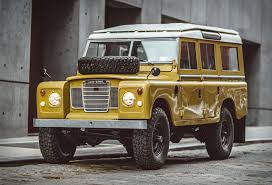
As demand increased, Land Rover introduced improved versions of the original model. The Series II was launched in 1958 with a more modern design, wider body, and better engine performance. It became one of the most recognizable Land Rover models ever produced. Later, the Series III arrived in 1971, offering improved comfort, updated interiors, and better engineering while maintaining the rugged nature that made Land Rover famous. During these decades, Land Rover became strongly associated with exploration and adventure. Many scientific expeditions and humanitarian missions depended on Land Rover vehicles. The British Army and several military forces around the world also adopted Land Rovers because of their reliability in difficult conditions. In Africa, Australia, the Middle East, and parts of Asia, Land Rover became an essential vehicle for transportation in remote regions where normal cars could not operate effectively.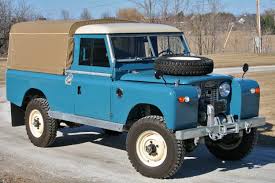
The Arrival of the Range Rover
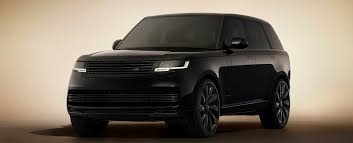
One of the biggest milestones in Land Rover’s history came in 1970 with the launch of the Range Rover. This model revolutionized the automobile industry by combining luxury with serious off road capability. Before the Range Rover, most four wheel drive vehicles were basic utility machines with limited comfort. Land Rover saw an opportunity to create a vehicle that could offer both premium comfort and strong off road performance.
The original Range Rover featured a stylish design, coil spring suspension, permanent four wheel drive, and a comfortable interior. It quickly attracted wealthy customers, outdoor enthusiasts, and families who wanted a vehicle capable of both city driving and adventurous travel. Over time, the Range Rover evolved into one of the most prestigious luxury SUVs in the world. It became associated with status, elegance, and performance while still maintaining the off road capability that defined the Land Rover brand.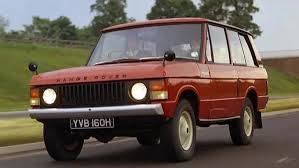
Expansion of the Product Line
During the 1980s and 1990s, Land Rover expanded its vehicle lineup to reach different types of customers. The Land Rover Discovery was introduced in 1989 as a practical family SUV. It offered a balance between affordability, comfort, and off road performance, making it extremely popular worldwide.
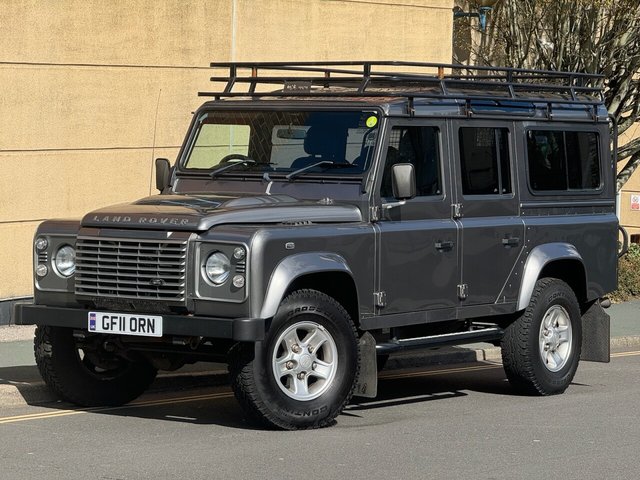
Another legendary model was the Land Rover Defender. Although it evolved from the original Series models, the Defender officially received its name in 1990. The Defender became famous for its extreme durability, simple mechanics, and ability to survive in harsh environments. The Defender was widely used by explorers, rescue organizations, farmers, military forces, and humanitarian agencies such as the International Federation of Red Cross and Red Crescent Societies. Its iconic box shaped design and rugged engineering made it one of the most recognizable off road vehicles ever built.
Ownership Changes and Business Challenges
Despite its strong reputation, Land Rover experienced several ownership changes throughout its history. During the 1960s, the Rover Company became part of British Leyland, a large British automotive corporation. However, British Leyland faced financial and management problems, which affected many of its brands.
Later, Land Rover became part of the Rover Group. In 1994, the German automobile company BMW purchased the Rover Group. Under BMW ownership, Land Rover received investments in technology, quality improvements, and new vehicle development. In 2000, Ford Motor Company acquired Land Rover and placed it under its Premier Automotive Group alongside luxury brands such as Jaguar, Volvo, and Aston Martin. Ford helped modernize the company and improve production standards. However, the global financial crisis and Ford’s own economic difficulties eventually led to the sale of Land Rover.
The Tata Motors Era
In 2008, Indian automobile manufacturer Tata Motors purchased both Jaguar and Land Rover from Ford. The two brands were combined under the name Jaguar Land Rover (JLR). At first, many people doubted whether Tata Motors could successfully manage two famous British luxury brands. However, Tata Motors invested heavily in research, technology, manufacturing, and global expansion.
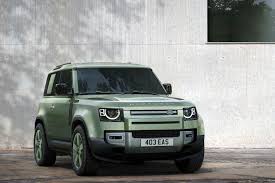
Under Tata ownership, Land Rover achieved major success. The company introduced several modern and highly successful models, including the Range Rover Evoque, the Range Rover Sport, and the redesigned modern Defender. The Evoque became especially popular among younger buyers because of its stylish appearance and urban luxury appeal. Meanwhile, the new Defender successfully combined modern technology with the rugged spirit of the original classic model.
Innovation and the Future of Land Rover
Today, Land Rover is recognized as one of the world’s leading luxury SUV manufacturers. Its vehicles are sold across Europe, Asia, North America, the Middle East, Africa, and Australia. Modern Land Rover vehicles include advanced technologies such as terrain response systems, air suspension, digital infotainment systems, driver assistance features, and hybrid powertrains. The company has also focused on improving fuel efficiency and reducing environmental impact.
As the global automobile industry shifts toward sustainability, Jaguar Land Rover has announced plans to develop more electric and hybrid vehicles. The company aims to move toward cleaner transportation while preserving the performance and off-road capability that define the brand. Land Rover has also expanded its manufacturing operations beyond the United Kingdom, including production facilities in countries such as Slovakia, China, Brazil, and India.