The Changing Nature of Weather
Weather influences almost every part of the natural world. It determines when plants grow, when animals migrate, how rivers flow and how ecosystems survive. For generations, people have relied on seasonal patterns to grow crops, manage water supplies and plan their daily activities. However, these familiar patterns are becoming less reliable in many parts of the world.
In some countries, summer temperatures rise beyond normal levels, while other regions experience unexpected cold spells. Rainfall may arrive earlier or later than usual, and storms can develop rapidly. These changes often make it difficult for communities to prepare for natural disasters.
It is important to understand that not every unusual weather event is caused by climate change. Weather naturally varies from day to day and year to year. However, long-term global warming is changing the conditions in which weather develops. As a result, certain extreme events, including heatwaves and heavy rainfall are becoming more likely or intense in many regions.
1. Global Warming Is Changing the Earth's Climate
One of the main reasons behind changing weather patterns is global warming. The Earth's average temperature has increased because human activities release greenhouse gases into the atmosphere. Carbon dioxide, methane and other gases trap heat, preventing some of it from escaping into space.
Burning coal, oil and natural gas for electricity, transport and industrial production releases large amounts of carbon dioxide. Deforestation also contributes to the problem because trees absorb carbon dioxide as they grow.
As the atmosphere becomes warmer, it changes the behavior of the entire climate system. Higher temperatures can increase evaporation from land and water surfaces. This can dry out soil and vegetation, making some areas more vulnerable to drought and wildfires.
At the same time, warmer air can hold more moisture. When suitable weather conditions develop, that additional moisture can contribute to heavier rainfall. This helps explain why some regions experience severe flooding while others struggle with prolonged dry periods.
From my perspective, global warming is not simply about hotter days. It is about changing the natural balance that communities, plants and animals have depended on for centuries.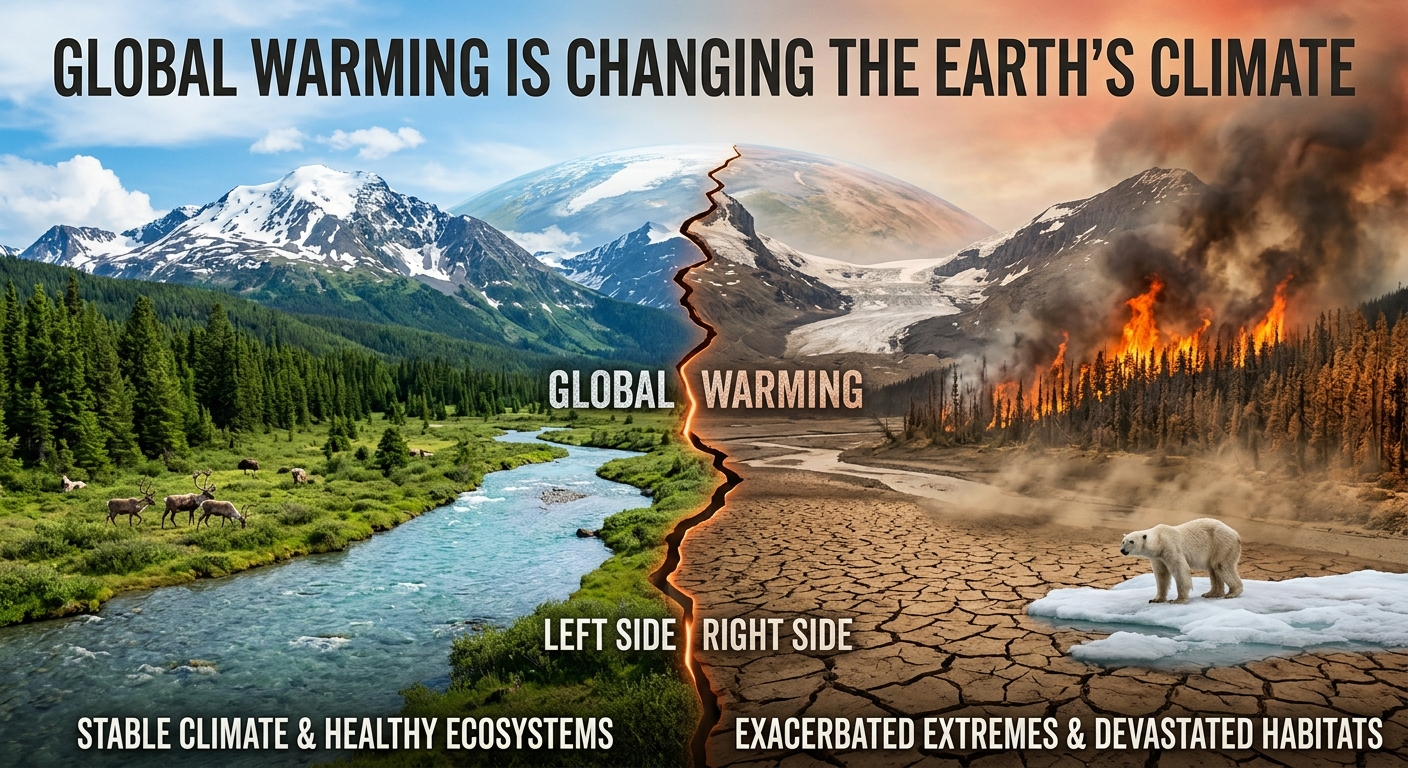
2. The Oceans Influence Weather Patterns
The oceans play a major role in controlling the Earth's weather. They absorb enormous amounts of heat and move energy around the planet through ocean currents. Changes in ocean temperatures can influence rainfall, wind patterns and storm development across distant regions.
One well known example is El Nino, a natural climate phenomenon involving unusually warm sea surface temperatures in parts of the tropical Pacific Ocean. Its opposite phase, La Nina, involves unusually cool temperatures in the same region.
These events can affect weather across the world. Depending on the region and the season, they may influence droughts, flooding, agricultural production and tropical cyclone activity.
For example, El Nino can contribute to reduced rainfall in parts of Southeast Asia, although its effects vary by location and season.
The Indian Ocean has its own influence through variations in the temperature difference between its western and eastern regions. This phenomenon, known as the Indian Ocean Dipole, can affect rainfall across countries surrounding the ocean.
When these natural climate patterns interact with long term global warming, weather conditions can become more difficult to anticipate over longer periods.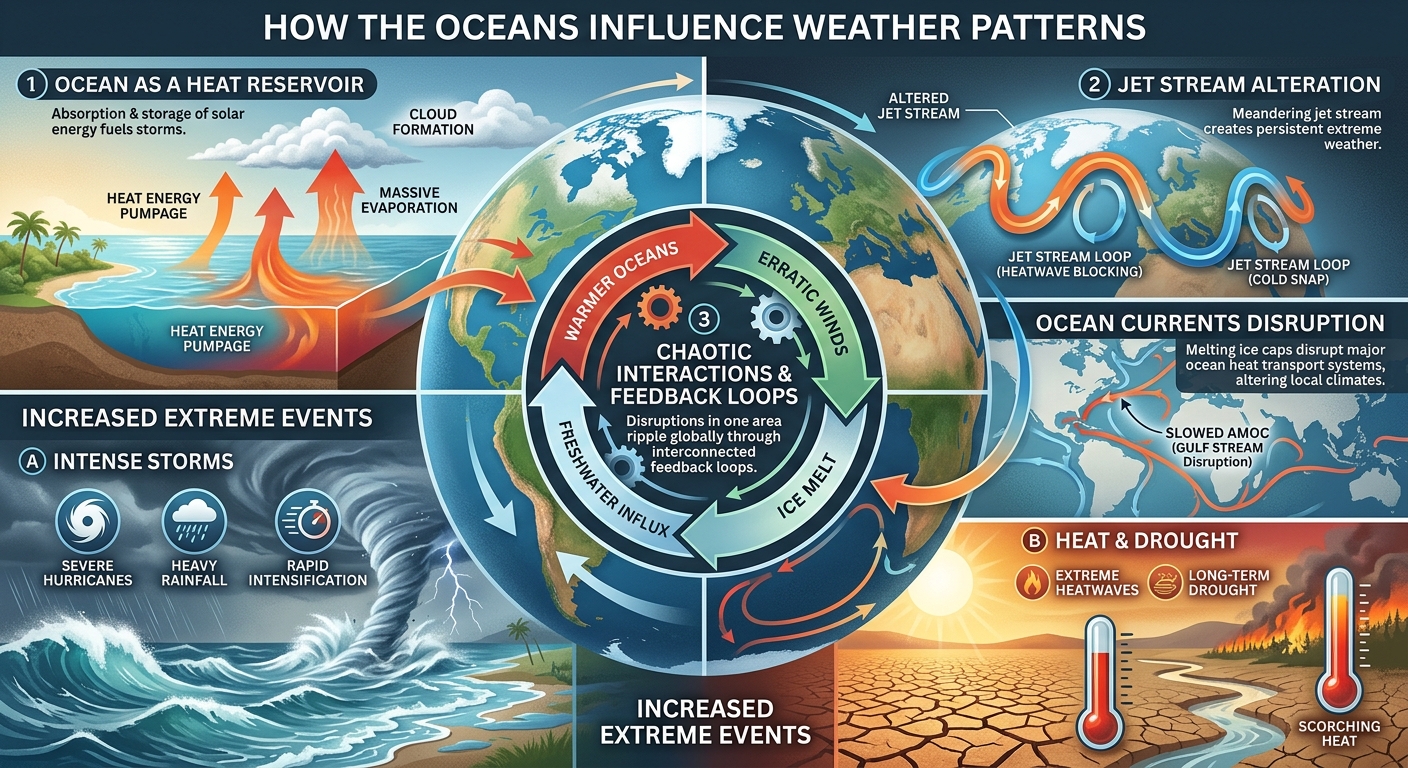
3. Deforestation Disrupts Natural Water Cycles
Forests are essential for maintaining a healthy environment. Trees absorb carbon dioxide, provide habitats for wildlife, protect soil and release water vapor into the atmosphere through a process called transpiration.
When large areas of forest are removed, these natural processes are disrupted. Without sufficient tree cover, the soil may lose moisture more quickly and rainwater can run off the land instead of soaking into the ground.
Deforestation can also increase the risk of soil erosion, landslides and flooding, particularly when heavy rain falls on steep or exposed land. In some regions, losing forest cover may influence local rainfall patterns by reducing the amount of moisture recycled into the atmosphere.
Agricultural expansion, road construction, mining and urban development are common causes of forest loss.
Protecting forests will not stop every drought or flood, but it can strengthen natural systems and help communities cope with changing weather conditions.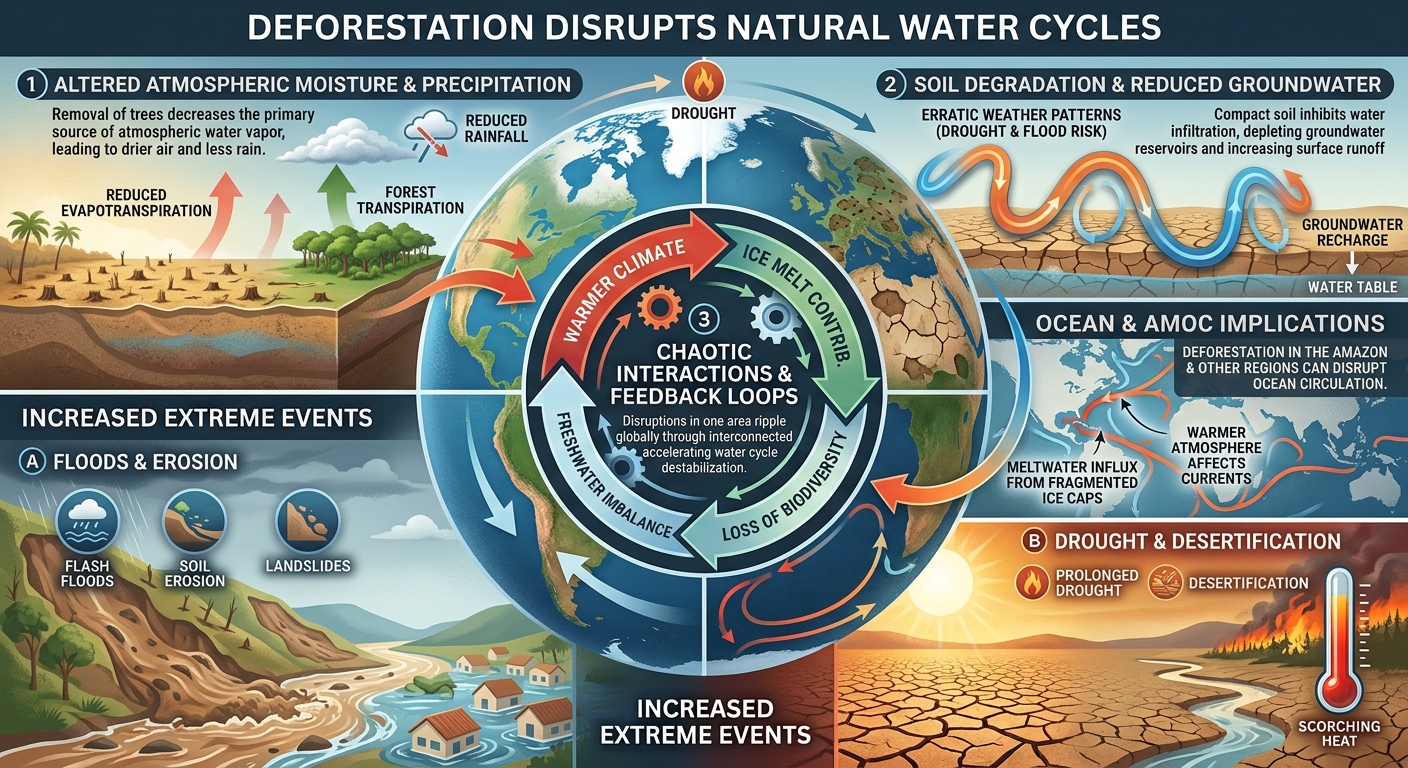
4. Rising Temperatures Increase the Risk of Extreme Rainfall
A warmer atmosphere changes how water moves through the environment. Higher temperatures generally increase evaporation, allowing more moisture to enter the atmosphere. When this moisture condenses under suitable conditions, it can produce intense rainfall.
This is one reason why certain regions are experiencing heavier downpours. Instead of receiving moderate rain over several days, an area may receive a large amount within a few hours.
Such rainfall can overwhelm drainage systems, fill rivers rapidly and cause flash floods. Urban areas are particularly vulnerable when roads, buildings and concrete surfaces prevent water from naturally soaking into the ground.
However, the relationship between warming and rainfall is not identical everywhere. Some places may receive heavier rainfall during particular events but experience longer dry periods between them.
In my view, one of the most concerning aspects of changing weather is this uncertainty. Receiving more rain does not necessarily mean having a reliable water supply. The timing, intensity and distribution of rainfall matter just as much as the total amount.
5. Human Activities Make the Problem Worse
Human development has improved living standards, created employment and expanded access to technology. However, some activities have also placed considerable pressure on the natural environment.
Industrial emissions, fossil fuel consumption, intensive agriculture and the destruction of natural habitats contribute to climate change and environmental degradation.
Cities also influence local weather. Roads, buildings and other hard surfaces absorb and retain heat, creating what scientists call the urban heat island effect. As a result, some cities remain warmer than nearby rural areas, particularly at night.
Air pollution can affect atmospheric processes, including the formation of clouds and the behavior of rainfall, although these effects vary according to the type of pollution and local conditions.
Human activities can also increase the consequences of extreme weather. Constructing buildings in floodplains, removing mangroves and allowing poor drainage systems to develop can turn heavy rainfall into a major disaster.
Human activities can also increase the consequences of extreme weather. Constructing buildings in floodplains, removing mangroves and allowing poor drainage systems to develop can turn heavy rainfall into a major disaster.
Therefore, the problem is not limited to the weather itself. The way people use land, build communities and consume natural resources can determine how seriously weather changes affect their lives.
6. Why Weather Forecasting Cannot Predict Everything
Modern weather forecasting has improved significantly through satellites, radar systems, computer models and advanced scientific research. Meteorologists can often predict approaching storms and major weather systems several days in advance.
However, weather is a complex system involving countless interactions between the atmosphere, oceans, land and sunlight. Small differences in initial conditions can lead to significantly different outcomes over time.
This is sometimes described as the butterfly effect, a concept associated with chaos theory. It does not mean that a butterfly literally causes every major storm. Instead, it illustrates how small changes within a complex system can influence later developments.
Nevertheless, uncertainty does not mean forecasting is useless. Weather warnings, rainfall monitoring and early preparation can save lives, even when the exact timing or location of an event remains uncertain.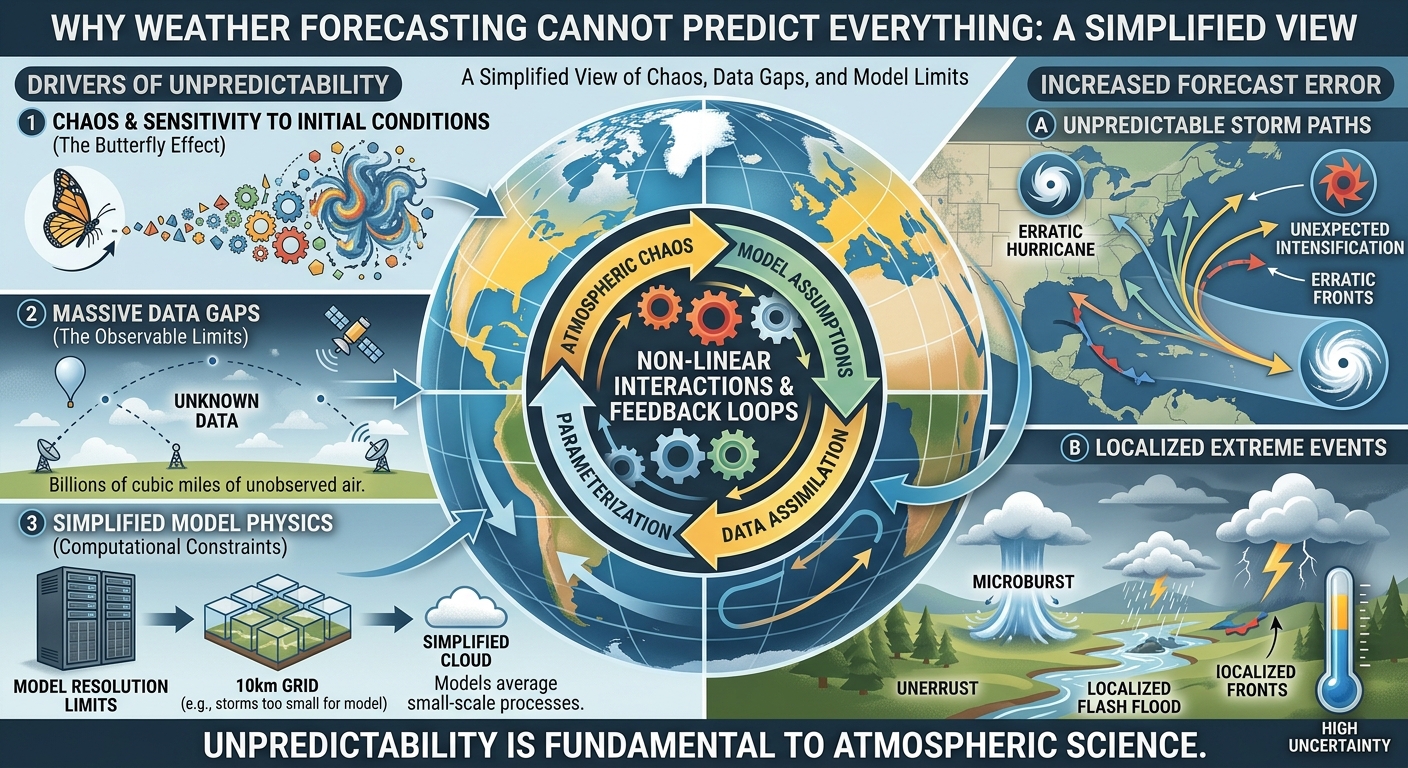
My Personal Perspective
In my opinion, the world's changing weather is a serious reminder that humans are closely connected to nature. When I think about the increasing heat, unexpected rainfall, floods and droughts, I realize how much our daily lives depend on a healthy environment. These changes can affect our food, water, health and future opportunities.
I believe that protecting nature should be everyone's responsibility, not only the duty of governments or environmental organizations. Simple actions, such as planting trees, saving water, reducing waste and protecting forests, can contribute to a healthier planet. However, larger changes are also necessary, especially in industries and energy production.
Personally, I feel that we should stop treating environmental protection as something we can postpone until tomorrow. We may not be able to control the weather, but we can change how we treat the Earth. If we begin making responsible decisions today, we can help protect nature and create a better future for the next generation.
The future of our weather depends partly on the choices we make today. By respecting nature and using its resources responsibly, we can help create a safer and more sustainable world for future generations.