What Those Tiny Symbols on Your Clothing Labels Really Mean
A little bucket. An iron. A triangle. A circle. Sometimes there are dots, lines, or a symbol crossed out with an X.
We see them all the time.
But if someone suddenly asked, “What exactly does this symbol mean?”, would you actually know?
Honestly, I didn't.
I used to look at clothing labels mainly to check the size, material, or whether something was made of cotton. The washing symbols were there, but I rarely paid attention to them. I would simply wash clothes the way I normally do and hope for the best.
Then I started looking into what these symbols actually mean, and I realized how much useful information is hidden in those tiny pictures.
They aren't random designs. They are instructions from the manufacturer about how a particular garment should be washed, dried, ironed, bleached, or professionally cleaned. Understanding them can help prevent clothes from shrinking, losing their color, stretching, becoming misshapen, or getting damaged.
So, if you've ever wondered what those mysterious little symbols on your clothes are trying to tell you, here's a simple guide.
The bucket symbol: How should you wash it?
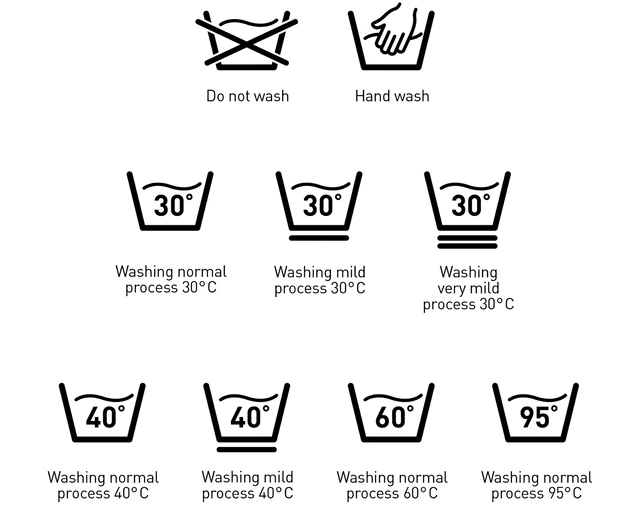
The symbol that looks like a small bucket or tub usually tells you how the garment should be washed.
A tub with a number inside generally indicates the maximum washing temperature in Celsius. For example, you might see 30, 40 or 60.
A 30°C symbol means the garment can be washed at a maximum temperature of 30°C. This is common for delicate or colored clothing.
A 40°C symbol allows washing at up to 40°C, while 60°C permits a higher temperature.
But there's another detail many people overlook: the lines underneath the tub.
One line underneath usually indicates a gentler washing cycle. Two lines indicate an even more delicate treatment.
And if you see a hand inside the tub, it means hand washing is recommended rather than a normal machine cycle.
If the tub is crossed out, the garment should not be washed with water.
This is one reason why throwing every piece of clothing into the same washing machine cycle isn't always a good idea.
The triangle: Can you use bleach?
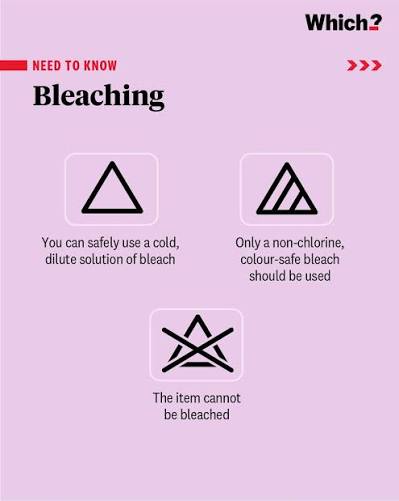
The triangle symbol relates to bleaching.
A plain triangle generally means that bleaching is allowed.
A triangle with two diagonal lines usually means that only certain non chlorine or oxygen based bleaching products should be used.
A crossed out triangle means do not bleach.
This matters more than people might think. Using the wrong bleach on colored or delicate clothing can cause permanent color loss or fabric damage.
So before reaching for bleach because a white shirt has a stain, checking that tiny triangle could save the shirt.
The square: How should you dry it?
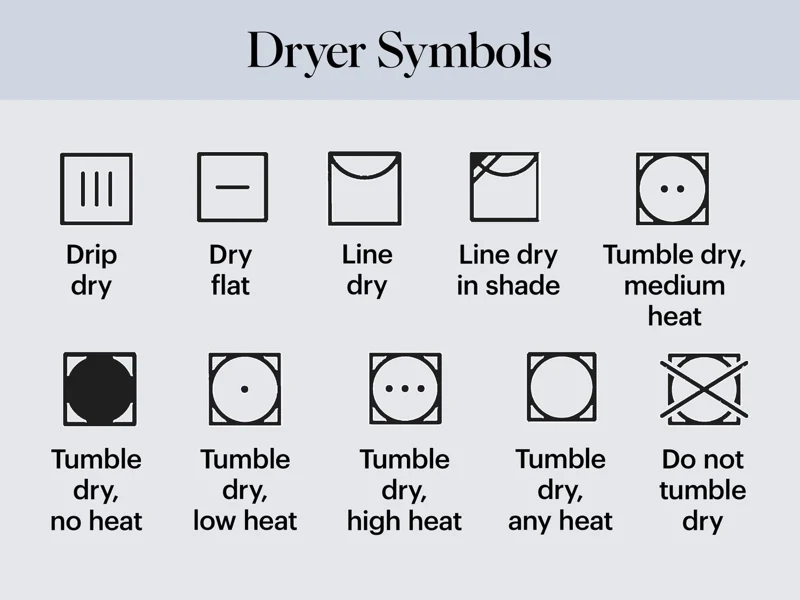
The square symbol gives you information about drying.
A square containing a circle is the symbol associated with tumble drying.
Dots inside the circle indicate the recommended heat level. Generally, one dot represents a lower temperature, while two or three dots indicate progressively higher temperatures.
If the tumble dry symbol is crossed out, the garment shouldn't be put in a tumble dryer.
You may also see different lines inside a square representing methods such as line drying, drip drying or drying flat.
This is particularly important for clothes that can easily lose their shape.
For example, some knitted garments can stretch badly if they're hung while wet. A “dry flat” instruction is there for a reason.
Sometimes the simplest way to protect a favorite piece of clothing is simply to follow the drying instruction rather than treating it like every other garment.
The iron symbol: It's not just an iron
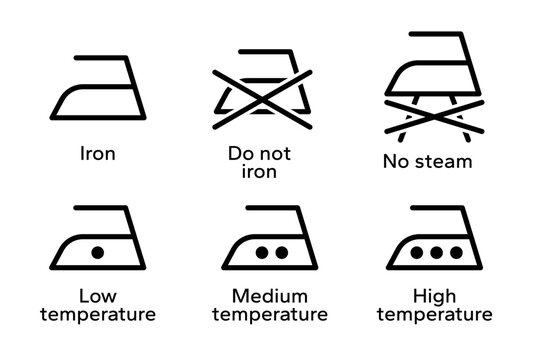
The iron symbol tells you whether and how the garment can be ironed.
- One dot generally indicates a low temperature.
- Two dots indicate a medium temperature.
- Three dots indicate a higher temperature.
A crossed out iron means the garment should not be ironed.
This can be especially important with synthetic materials. Applying too much heat can leave shiny marks, distort the fabric, or even melt certain fibres.
If you're unsure, starting at a lower temperature is generally safer than immediately using the hottest setting.
The mysterious circle: What does it mean?
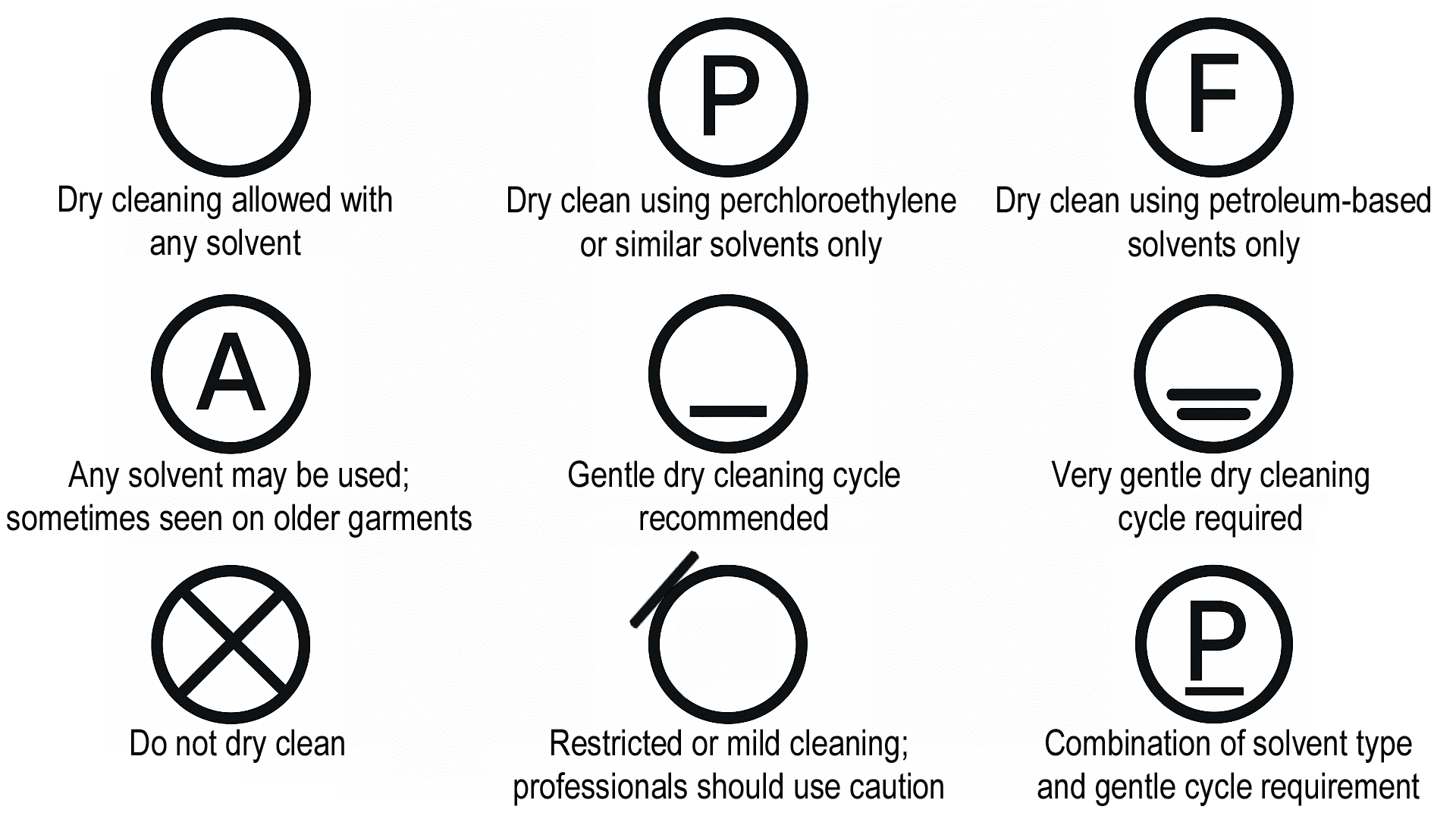
The circle usually relates to professional textile cleaning, including dry cleaning.
You may see different letters inside the circle. These letters are primarily instructions for professional cleaners about which cleaning processes or solvents may be appropriate.
For the average person, the most important thing to recognize is the basic distinction:
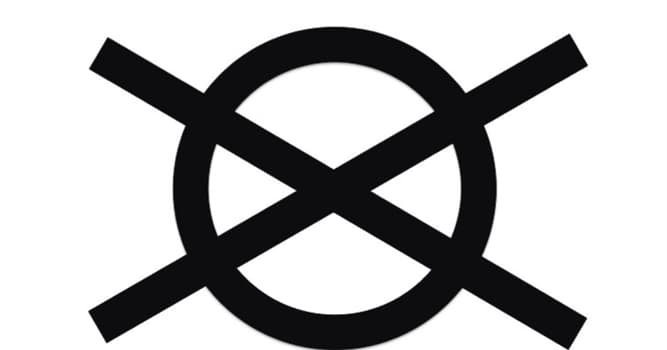
A circle means professional cleaning may be appropriate, while a crossed-out circle means the garment should not be dry cleaned.
You don't necessarily need to memorize every letter inside the circle. The important thing is knowing when a garment requires professional care rather than treating it like an ordinary washable item.
What does the X mean?
This might be the easiest symbol to understand.
When one of these symbols is crossed out, it generally means don't do that particular thing.
- A crossed out washing tub means don't wash with water.
- A crossed out triangle means don't bleach.
- A crossed out iron means don't iron.
- A crossed out tumble drying symbol means don't tumble dry.
It sounds obvious, but those little crosses can prevent some very expensive mistakes.
Why are these symbols so important?
You might be wondering whether all this really matters for everyday clothes.
It does, especially for clothes made from different types of fibres.
Cotton, wool, silk, linen, polyester, viscose and other materials don't necessarily react to heat, water, friction and drying in the same way.
A garment may look perfectly fine when you buy it, but one unsuitable wash can change it dramatically.
- It could shrink.
- It could stretch.
- The color could fade.
- The fabric could become rough.
- The shape could change.
A delicate item could even become completely unwearable.
That's why the care label is essentially a small instruction manual sewn into your clothes.
Don't assume “cold” always means “safe”
One thing I found particularly interesting while learning about clothing care symbols is that temperature isn't the only factor that matters.
The washing cycle itself can matter too.
A delicate garment may require a gentle cycle even if the water temperature is low. Strong spinning, excessive friction or rough handling can damage certain fabrics.
So simply thinking, “I'll wash everything in cold water” isn't necessarily enough.
The entire symbol combination matters.
Why do some clothes have so many instructions?
Sometimes you might look at a label and think, “Why does this tiny piece of fabric need so many symbols?
”Because clothing isn't one size fits all when it comes to care.
A garment might contain several different materials. It might have special dyes, printed designs, embroidery, embellishments, delicate stitching, or a shape that can easily be distorted.
The manufacturer has considered how the garment is expected to behave under different cleaning and drying conditions.
Those tiny symbols are therefore there to help you maintain the garment for as long as possible.
A simple habit that can save your clothes
Here's something I personally think is worth doing: don't remove the care label immediately just because it feels annoying or uncomfortable.
If a label is irritating your skin, you may be able to carefully remove it after checking and remembering the important instructions. But before doing so, take a photo of it.
That way, you still have the information if you forget how the garment should be washed later.
Another useful habit is to check the label before the first wash, especially when you've bought something new.
The first wash is often when people discover that a garment shouldn't have been treated like their everyday clothes.
What about clothes from different countries?
If you're shopping internationally, the symbols are particularly useful because care labels can contain instructions that don't depend on language.
You might buy a shirt in one country, a jacket online from another, and a dress while travelling somewhere else. The written instructions could be in languages you don't understand.
The standardized care symbols can still provide important information.
That's one of the things I found fascinating: these tiny symbols can communicate care instructions across language barriers.
The label is telling you more than you think
The next time you buy a shirt, dress, pair of trousers, sweater or jacket, don't just look at the size.
Turn it around.
Look at those tiny symbols.
Ask yourself: Can I machine wash this? What temperature? Can I bleach it? Can it go into the dryer? Should I dry it flat? Can I iron it? Does it need professional cleaning?
You may discover that you've been misunderstanding some of these symbols for years.
I certainly was.
What began as a few tiny pictures that I normally ignored turned out to be a surprisingly useful guide to taking care of clothes properly. And once you understand the basic symbols, clothing labels stop looking like a strange collection of meaningless shapes.
They start making sense.
So the next time you see that little bucket, triangle, square, iron or circle on your clothing label, don't ignore it.
You've probably seen it hundreds of times.
But now you know that it has something important to say.