Weirdest Foods Around the World That Taste Surprisingly Good
“Weird” is a relative term. What is considered a delicacy in one country may be the most disgusting thing in another. When traveling around the world, we encounter many foods that challenge our senses. Some are considered “weird” because of their smell, some because of their appearance, and some because of the way they are prepared. They may initially disgust us because we are not accustomed to them. But the more important question is: why do certain cultures eat such foods? Often, the reason may be climate, resource conservation, or some historical necessity. Humans invented various ways to preserve food for long periods of time through methods such as fermenting, drying, and burying. At the same time, the flavors that emerged from these practices have been loved for generations. In this article, we will explore some of the world’s “weirdest” but most memorable foods. The focus here is on the cultural background behind them, the lifestyles of the people who enjoy them, and the challenges a traveler faces when thinking about trying them.
The World's Weirdest Food Cultures
How Foods That Look Strange Became Popular in Different Countries and the Traditions Behind Them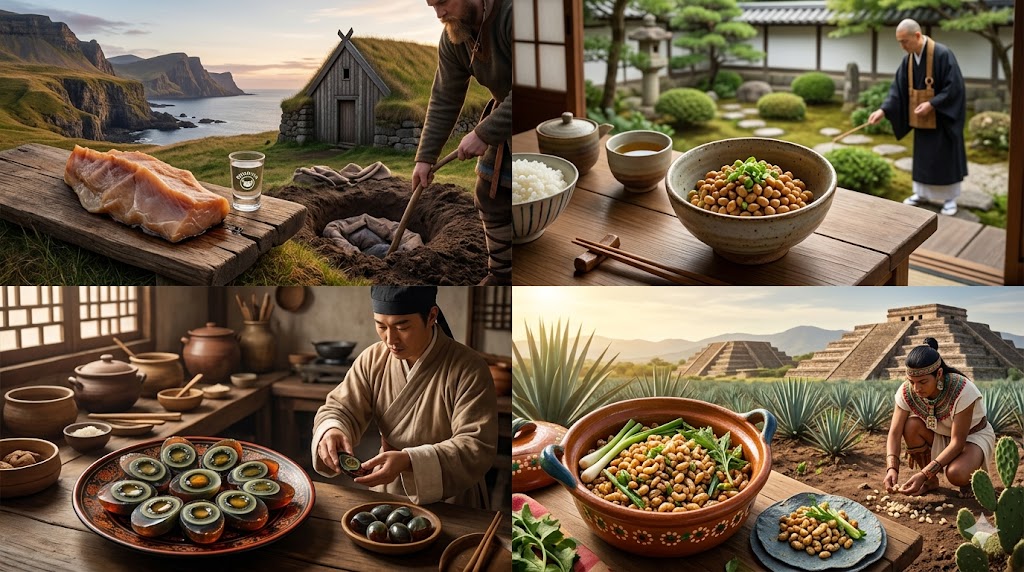
There are foods that can be considered “weird” in almost every culture in the world. But when you look at the context in which these foods originated, they are often tied to climate, resource scarcity, or religious beliefs.
Hákarl
For example, take the fermented shark meat called hákarl in Iceland. Since the meat of the Greenland shark is poisonous when fresh, it is only suitable for consumption after being buried in the ground for months and fermented. This method, which dates back to the time of the Vikings, has been preserved to this day because it is a national heritage with a strong cultural significance. Although first time tasters cannot stand its ammonia smell, Icelanders enjoy it with a drink called brennivín, also known as “Black Death.”
Nattō
In Asia, Japan’s nattō, fermented soybeans, also holds a similar place. Its slippery texture and strong aroma make many Westerners hesitant, but the Japanese eat it with rice for breakfast. Natto is a potent source of protein and vitamin K2, thanks to the enzymes produced by bacterial fermentation. In traditional Japanese medicine, it is believed to prevent blood clots and aid digestion. Like many other fermented foods, natto has long been associated with the dietary traditions of Buddhist monks in Japan.
Century Eggs
In China, century eggs, also known as preserved eggs, have a very unusual appearance. With a dark yolk and an amber colored white, these eggs are made by preserving them for weeks or months in a mixture of clay, ash, salt, lime, and straw. The result is a creamy, cheesy flavor with an ammonia like and sulfur like aroma. History shows that this dish was created about 500 years ago during the Ming Dynasty out of a need to preserve food for long periods.
Escamoles
In Mexico, escamoles are ant eggs or ant larvae. They are also known as “insect caviar.” Dating back to the Aztec civilization, this dish has a creamy texture with a buttery and nutty flavor. It is usually served with corn tortillas or with sauces such as mole. Once a local delicacy, it is now sold at high prices in luxury restaurants in Mexico City. This is because ant eggs are extremely difficult to collect, and they are only available for a few weeks each year.
Each of these examples shows that “strange” is a relative concept. What is unusual in one country may be an integral part of life in another. Only by understanding the cultural background behind these foods can we truly understand their value.
Strange to Look At, Unforgettable to Taste
Some Foods That Seem Scary or Unusual at First Glance but Are Famously Delicious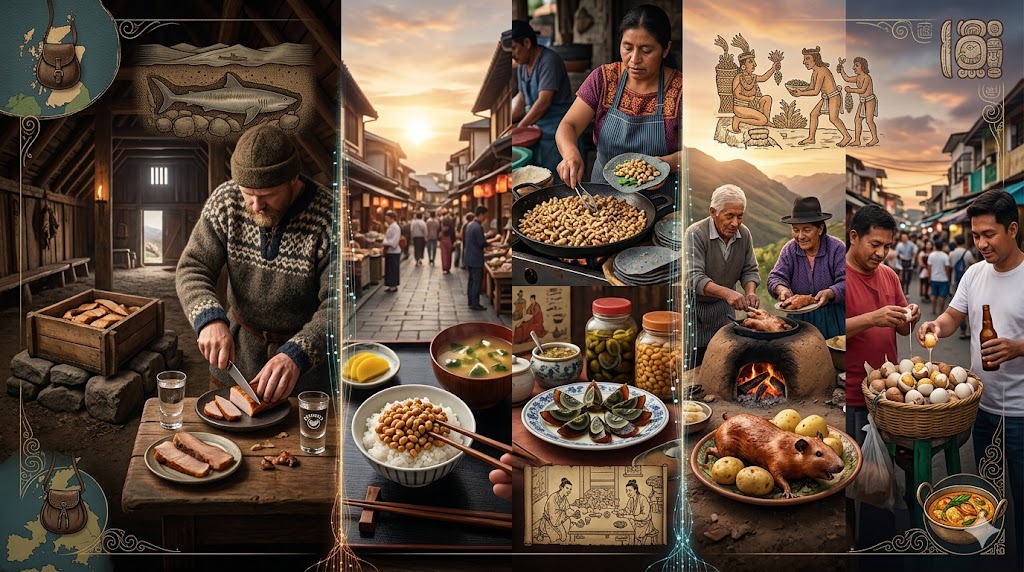
The saying “looks can be deceiving” is often true in the food world. Many dishes that challenge our senses at first sight become unforgettable experiences with one sip or bite.
Balut
One such famous example is the Philippines’ balut, a boiled duck egg containing a partially developed duck embryo. This egg contains the duckling’s bones, feathers, beak, and even eyes. Although many Western tourists find this appearance horrifying, Filipinos enjoy it as a popular street food and often pair it with beer. Its taste is rich and savory, with a creamy yolk, and even the chick parts are considered crispy and delicious.
Cuy
The Peruvian cuy is the guinea pig. Considered a pet in many countries, this animal has a culinary tradition in the Andes that dates back more than 5,000 years. It is usually eaten whole, with the head, ears, and legs clearly visible, either roasted or stewed. Although initially intimidating, its meat is very tender, with a flavor somewhere between chicken and rabbit. Low in fat and high in protein, it remains a staple protein source in rural Peru.
Gaeng Tai Pla
In northern Thailand, gaeng tai pla is a curry made with fermented fish byproducts. Its aroma is extremely strong, with many describing it as “stinky.” However, when cooked with pumpkin, bamboo shoots, and Thai eggplant, the curry develops an intense umami flavor and a deep complexity. Travelers who try it for the first time often become fans by the second or third attempt.
Haggis
Scotland’s haggis tells a similar story. A sheep’s heart, liver, lungs, rolled oats, and spices are cooked inside a sheep’s stomach. Although it looks very different from a typical dish, it has a rich, spicy flavor that is comparable to other types of sausage. Scottish poet Robert Burns even wrote a poem called “Address to a Haggis.” While this dish may appear frightening at first glance, after one taste many people describe it as unforgettable.
Foods That Seem Strange to Foreigners but Are Part of Everyday Food Culture
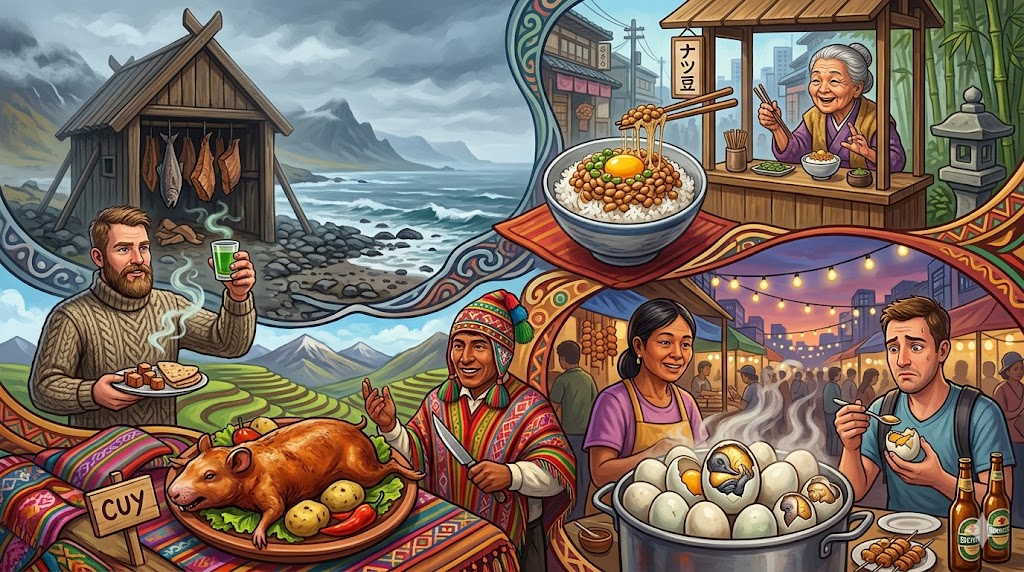
In almost every part of the world, foods that seem unusual to foreigners are an integral part of the daily lives of local people.
Tiết Canh
In Vietnam, tiết canh, a raw blood pudding, is a famous example. Fresh duck, pig, or goat blood is seasoned with spices and nuts and then refrigerated to create a jelly like texture. In rural areas of northern Vietnam, it is one of the most anticipated dishes during festivals and special occasions. Although many Westerners fear that it is unsafe, freshly prepared tiết canh made from clean animal blood is considered a delicacy by local connoisseurs.
Durian
Another well known challenge in Indonesia and southern China is the durian fruit. It is known as the “king of fruits,” but its smell is so strong that many compare it to a chemical weapon. Durian is banned from subways, hotels, and airplanes in countries such as Singapore and Thailand because of its odor. However, once people become accustomed to the fruit, many become addicted to its creamy, custard like texture and unique blend of almond, caramel, and onion flavors. For some, it is a food from heaven, while for others, it is simply the smell of hell.
Hongeohoe
In South Korea, hongeohoe, or fermented stingray fish, emits an extremely strong ammonia odor. While Westerners compare it to toilet cleaning chemicals, Koreans enjoy it with kimchi, pork, and makgeolli, a traditional rice wine. Especially in the Jeolla Province, hongeohoe is a respected dish, and its umami flavor and fermentation complexity are highly prized among connoisseurs. The tradition behind this dish comes from ancient methods of preserving seafood for long periods.
Rakfisk
Finally, there is rakfisk in Norway, a fermented trout dish. It is usually served after being fermented for three to twelve months. Although tourists often describe this fish as rotten, Norwegians enjoy it with flatbread, sour cream, onions, and potatoes. Rakfisk festivals are held throughout Norway every autumn. All of these examples show that the line between “normal” and “strange” varies from culture to culture and that the biggest challenge for a traveler is often the mental barrier to trying the unknown.
Conclusion
Our first reaction to “strange” foods is often disgust or fear. But you cannot truly experience the world without exploring its food culture. Trying to understand why a food is important to local people is a way of honoring that culture. Whether it is Icelandic hákarl, Philippine balut, or Korean hongeohoe, every food tells a story about history, geography, and the remarkable adaptability of its people. As a traveler, dare to take your taste buds outside your comfort zone at least once. If you do, even the “strangest” foods can become some of the most unforgettable taste experiences of your life. In the end, the only real barrier to tasting the world is the imaginary fear in our minds.