Atomic Habits Review: Can Tiny Changes Really Transform Your Life?
Introduction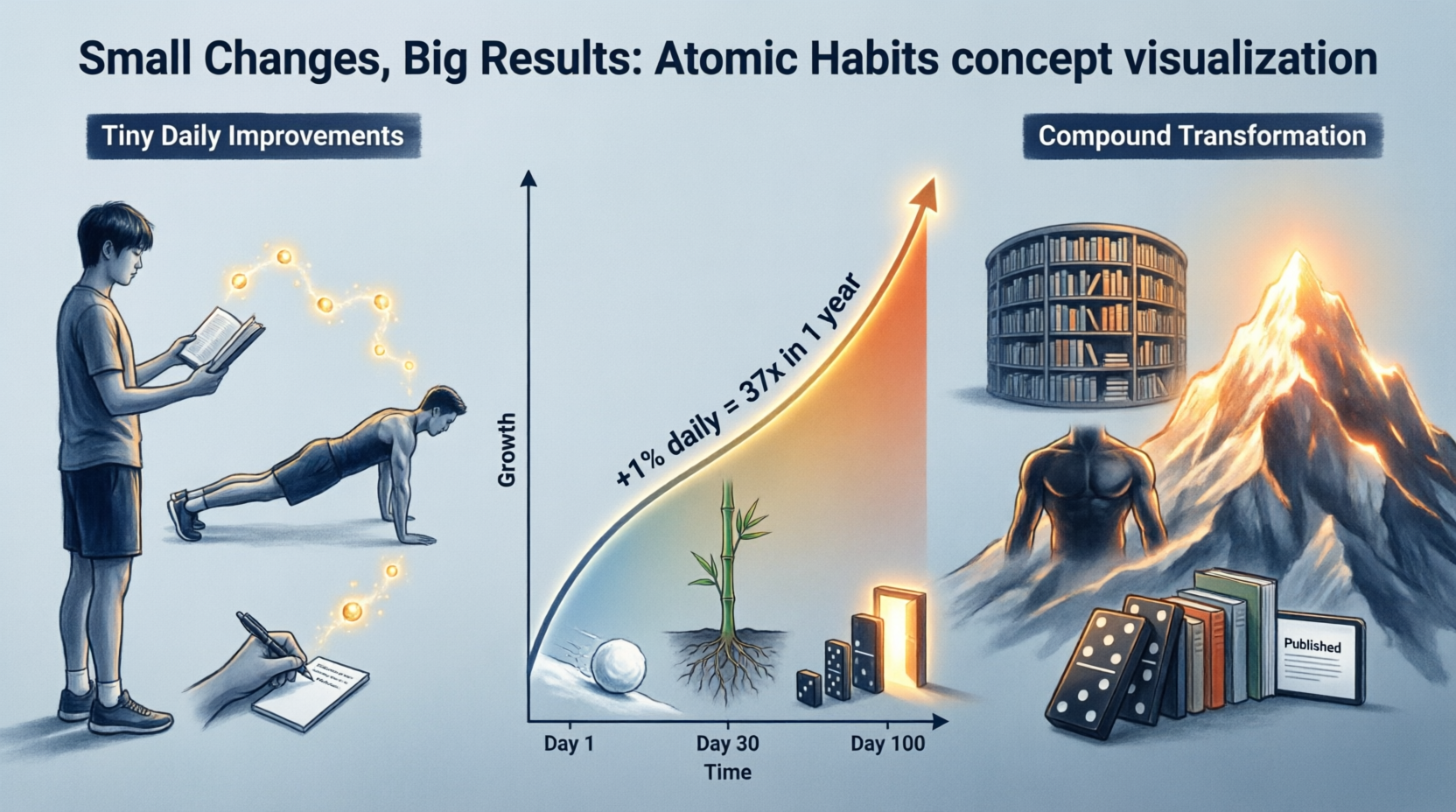
Many people believe that success comes from making big decisions, setting ambitious goals, or completely changing their lifestyle overnight. However, James Clear’s bestselling book Atomic Habits presents a different perspective: lasting success is created through small, consistent improvements made every day. The book explains how tiny changes in our habits can produce remarkable results over time.
Atomic Habits: 
An Easy & Proven Way to Build Good Habits & Break Bad Ones is a practical guide that combines scientific research, psychology, and real-life examples to help readers understand how habits work and how they can be improved. Rather than focusing only on motivation and willpower, James Clear explains that the environment, systems, and daily routines around us play a major role in shaping our behavior. The main message of the book is simple: small habits may seem insignificant at first, but their impact grows through repetition. Just as small drops of water can eventually fill a container, small positive actions can transform our health, career, relationships, and personal development.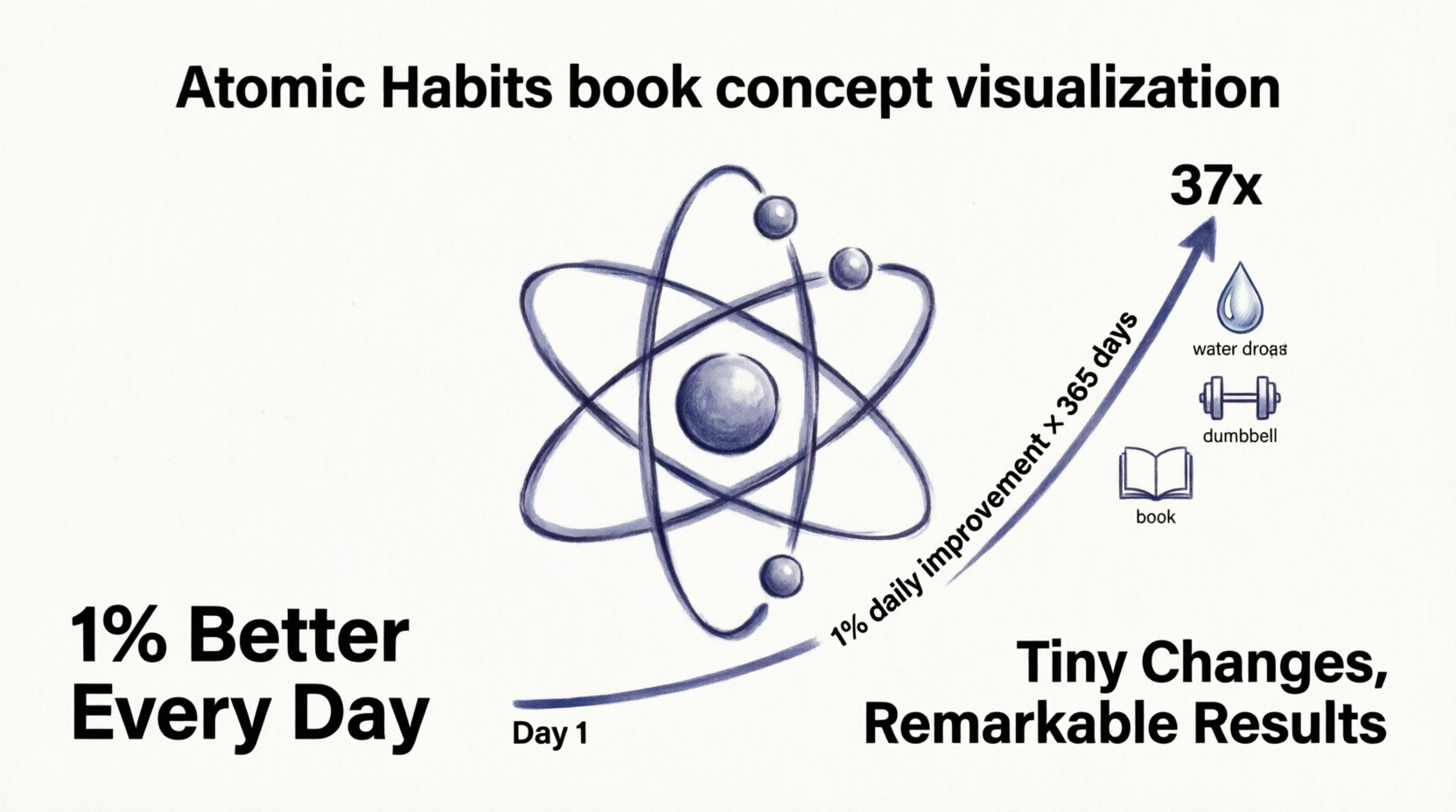
The Power of Small Improvements
One of the most important ideas in Atomic Habits is the concept of getting 1% better every day. James Clear explains that improving by a small amount consistently can create significant results over time. Many people underestimate the value of small actions because immediate changes are often difficult to see. For example, a person who reads only 10 pages of a book every day may not notice a major difference after one week. However, after one year, they may have completed several books and gained valuable knowledge. Similarly, exercising for just 20 minutes daily may appear insignificant, but over months and years, it can greatly improve physical health. The book encourages readers to focus less on dramatic transformations and more on creating sustainable systems. Instead of asking, “What big goal do I want to achieve?” Clear suggests asking, “What daily habits will help me achieve that goal?”
Goals vs Systems:
A Different Approach to Success: A major lesson from Atomic Habits is the difference between goals and systems. Goals represent the results we want to achieve, while systems are the processes we follow to reach those results.For example, many people set a goal to lose weight. However, simply having that goal does not guarantee success. A better approach is to create systems such as preparing healthy meals, exercising regularly, and developing a consistent sleep schedule. Similarly, a student may have a goal of achieving high grades. The system behind that goal includes studying regularly, taking notes, reviewing lessons, and practicing problem-solving. James Clear argues that successful people are not necessarily more motivated than others. Instead, they have developed effective systems that make success easier and more automatic.
The Four Laws of Behavior Change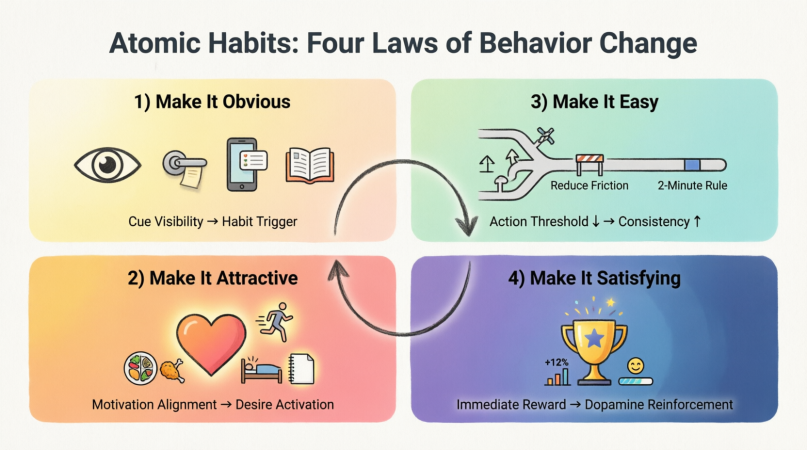
The foundation of the book is based on four laws that explain how to create good habits and eliminate bad ones.
1. Make It Obvious
The first step in building a habit is making it visible and clear. Many habits happen automatically because they are connected to certain triggers in our environment. For example, someone who wants to drink more water can place a water bottle on their desk where they can easily see it. A person who wants to read more books can keep a book beside their bed instead of storing it away. The environment around us influences our decisions more than we realize. By designing our surroundings carefully, we can make positive habits easier to follow.
2. Make It Attractive
People are naturally drawn toward activities that provide pleasure or satisfaction. To build a habit, it is important to make the behavior appealing. For example, someone who dislikes exercising might listen to their favorite music or podcasts while working out. A person trying to develop a reading habit might choose interesting books instead of forcing themselves to read topics they dislike. When a habit becomes enjoyable, people are more likely to repeat it.
3. Make It Easy
One of the strongest ideas in the book is reducing friction. The easier a behavior is to perform, the more likely it is to become a habit. For example, if someone wants to start exercising, beginning with a five-minute workout is better than creating an unrealistic two-hour exercise plan. Small actions create consistency, and consistency creates progress.James Clear explains that success often comes from making good habits convenient and bad habits inconvenient.
4. Make It Satisfying
The final law focuses on creating immediate rewards. Humans naturally repeat behaviors that provide satisfaction.For example, someone saving money can track their progress visually by using a savings chart. Seeing improvement creates motivation to continue. Small rewards help reinforce positive behaviors and make habits stronger over time.
Identity-Based Habits: Changing Who You Are
One of the most powerful concepts in Atomic Habits is identity-based habits. Instead of focusing only on what you want to achieve, focus on the type of person you want to become.
For example, instead of saying: “I want to write a book.”A stronger identity-based approach is:“I am a writer.”Instead of saying: “I want to exercise more.”Think: “I am a person who values health.”When actions are connected to identity, they become more meaningful. People naturally behave according to their beliefs about themselves.A person who sees themselves as organized is more likely to maintain clean surroundings. A person who believes they are financially responsible is more likely to save money.
Real-Life Applications of Atomic Habits
The ideas in the book can be applied to almost every area of life. Health person does not need to completely change their lifestyle overnight. Small steps such as walking daily, drinking more water, and choosing healthier meals can gradually create better health outcomes.
Career Growth
Professional success often comes from continuous learning. Spending 15 minutes every day improving skills can create significant career advantages over time.Financial Improvement Small financial habits, such as tracking expenses, saving a small amount regularly, and avoiding unnecessary purchases, can improve financial stability.Personal Development Reading, journaling, learning new skills, and practicing gratitude are small habits that can improve emotional and mental well-being.Strengths of the Book One of the biggest strengths of Atomic Habits is its practical approach. Unlike many self-help books that focus mainly on motivation, this book provides clear strategies that readers can immediately apply.James Clear uses simple language, relatable examples, and scientific explanations, making the concepts easy to understand. The book is suitable for students, professionals, entrepreneurs, and anyone interested in personal improvement.Another strength is that it focuses on realistic change. It does not promise instant success. Instead, it teaches patience, consistency, and long-term thinking.
Limitations of the Book
Although Atomic Habits provides valuable advice, some readers may find that certain ideas are repeated throughout the book. Those who are already familiar with habit psychology may find some concepts less surprising.Additionally, while habits are extremely important, external factors such as financial conditions, opportunities, and personal circumstances can also influence success. Building good habits is powerful, but it is only one part of achieving larger goals.
Final Verdict
Atomic Habits is an excellent book for anyone looking to improve their life through small, meaningful changes. James Clear successfully explains that transformation does not always require dramatic action. Instead, consistent small improvements can create extraordinary results over time.The biggest lesson from the book is that success is not created by one major decision but by thousands of small choices repeated every day. Whether you want to improve your health, career, finances, or personal relationships, changing your habits can change your future.The book’s message is simple but powerful: small changes may seem insignificant today, but their effects can become life-changing over time. For readers who want to change their life but still continue with their old habits. This is the place you can start.