Saffron: The Golden Spice That Boosts Mood and Memory
Among all the spices in the world, saffron, with its golden hue and exorbitant price, holds a unique place. These few delicate threads, called kesara, of the saffron flower are worth more than just a spice, as they require thousands of flowers and hours of labor to produce. But saffron’s true value is not measured by its price alone. For more than 3,500 years, from ancient Persia to the Mediterranean, it has been used for food, medicine, textile dye, and ceremonial purposes. In recent decades, scientific research has revealed that saffron has an even deeper secret: its effects on human mood and memory. This spice, packed with natural antioxidants, has shown promising results in everything from relieving depression to preventing Alzheimer’s disease. In this article, we explore saffron’s historical value, its hidden health benefits, and its unique place in cuisines around the world.What is Saffron? Its History and World Value
The history of saffron goes back more than 3,500 years. Murals from the Minoan civilization in ancient Greece depict women picking saffron flowers. In Persia, modern day Iran, saffron was a royal crop. Records of it can be found in the cities of Athens, Rome, and Alexandria. During the fourth century BC, with the invasions of Alexander the Great, saffron spread to India and then to China. Saffron was used as a medicine during the Black Death in Europe in the fourteenth century. The town of Walden in England prospered from the saffron trade, and its name still survives as “Saffron Walden.”
Saffron cultivation requires a special climate: hot, dry summers, cool winters, and flowering in early autumn. Saffron should be picked between 3 a.m. and 10 a.m., as the flowers close afterward. The harvesting process takes hours, and the drying process is carried out using either traditional or modern techniques. About 90% of the world’s production comes from Iran. Greece, Spain, India, particularly Kashmir, and Morocco are other major producers.
Saffron is usually worth as much as gold. One gram costs anywhere from $10 to $15 and can exceed $100 for a high quality variety. Therefore, fake saffron is a major problem in the market. Fake saffron is made from corn starch, artificial dyes, silk threads, and other materials. To identify real saffron, place it in hot water. It releases a golden yellow color, not immediately, but after a few minutes. The smell is sweet, with a grassy aroma in the background.
Saffron's Effects on the Body and Mind: Improving Mood and Memory
Saffron's Chemical Composition: A Natural Antioxidant Treasury
Saffron has three main active ingredients: crocin, a pigment and antioxidant; safranal, a compound responsible for the aroma and mood enhancing effects; and picrocrocin, which contributes a bitter taste and antioxidant properties. These compounds enable saffron to exert powerful biological effects. In particular, crocin increases blood flow to the brain and protects nerve cells.
Antidepressant Effects: A Natural Antidepressant
Several scientific studies show that saffron is as effective as drugs such as fluoxetine (Prozac) in treating mild to moderate depression. A meta analysis of about 30 studies found that taking 30 milligrams of saffron daily for 6 to 8 weeks can reduce depressive symptoms by 25% to 40%. Saffron works by increasing levels of serotonin, often called the happy hormone, in the brain, reducing the stress hormone cortisol, and activating the GABA system. Unlike many pharmaceutical drugs, saffron has minimal side effects, which are usually limited to mild dry mouth or dizziness.
Anxiety and Stress Reducing Properties
Research has shown that the compound safranal in saffron has sedative properties similar to benzodiazepine drugs such as diazepam. In animal studies, doses of up to 100 milligrams of saffron reduced anxiety like behaviors by more than 50%. In human trials, those who took saffron supplements experienced about a 30% reduction in anxiety compared to the placebo group. This is because saffron reduced the activity of the amygdala in the brain, the region that plays a key role in fear and stress responses.
Improving Memory: A Weapon Against Alzheimer’s Disease?
One of the most exciting findings about saffron is its neuroprotective properties. In a study conducted at the University of Tehran in Iran, patients with mild to moderate Alzheimer’s disease were given 30 milligrams of saffron daily for six months. Their cognitive function, measured through MMSE tests, declined less than that of a group taking the drug donepezil.
How saffron affects memory:
Prevents the formation of amyloid beta plaques, a key feature of Alzheimer’s disease.
Increases neuroplasticity in the hippocampus. The hippocampus is the center of new memory formation.
Reduces oxidative stress. It removes free radicals from the brain and helps prevent the destruction of nerve cells.
Other Health Benefits
In addition to improving mood and memory, saffron has also been shown to provide the following benefits:
• Eye health: It may slow down age related macular degeneration, according to an Italian study.
• PMS (Premenstrual Syndrome): Studies show that it reduces symptoms by 50% to 70%.
• Sexual dysfunction: It may help alleviate sexual dysfunction, particularly when caused by fluoxetine.
Warning: Correct Dosage and Side Effects
Thirty milligrams of saffron per day, approximately a quarter of a teaspoon, is generally considered safe. However, doses exceeding 500 to 1,000 milligrams, approximately 2 to 4 teaspoons, can be toxic and may cause bleeding, vomiting, dizziness, and even death in extremely high amounts. Pregnant women should avoid medicinal doses of saffron altogether, although very small amounts used in food are generally considered safe.
Saffron Uses in Food: Flavor, Aroma, and Health Benefits
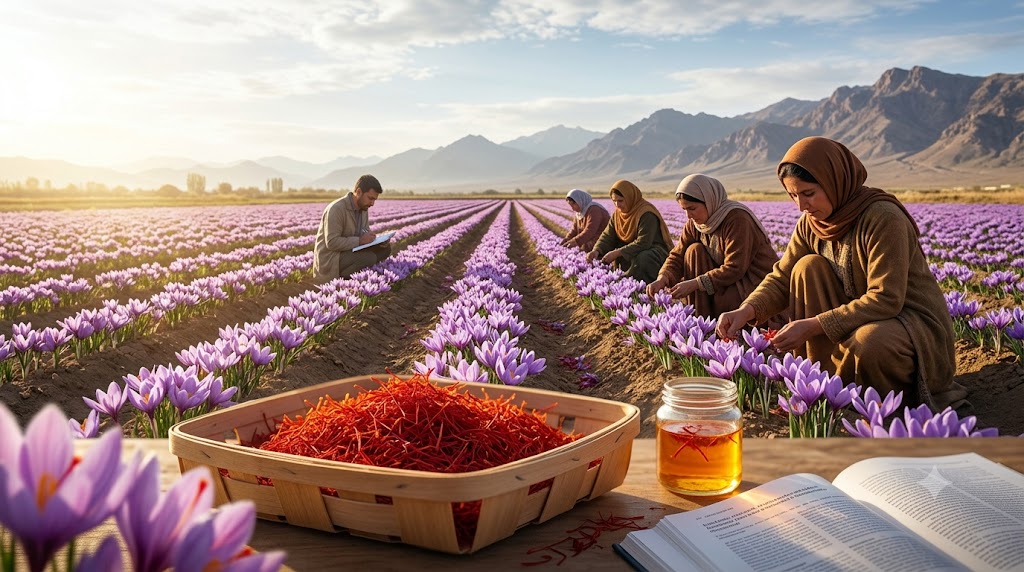
The Unique Flavor and Aroma Profile of Saffron
One word is not enough to describe the flavor of saffron. It is sweet, earthy, floral, with a metallic hint, and also slightly bitter. The main aromatic component is safranal, which is reminiscent of dried hay and honey. Crocin gives saffron its golden yellow color, while picrocrocin is responsible for its bitter taste. When using saffron, it is traditionally soaked in hot water or milk to release its full flavor and color.
World Famous Saffron Dishes
Spanish Paella – A Valencian rice dish made with saffron. Saffron not only gives the dish a golden color but also pairs wonderfully with seafood and poultry.
Indian Kesari Chawal – A rice dish flavored with cardamom, cloves, and cinnamon, using Kashmiri saffron, which is considered among the highest quality varieties.
Persian Tahdig and Sholezard – Saffron plays a central role in Iranian cuisine. Tahdig is a rice dish with a crispy golden crust, while Sholezard is a saffron flavored rice pudding made with rose water.
Swedish Saffransbullar (Lussekatter) – Saffron flavored sweet bread traditionally made for Lucia Day on December 13 in Sweden.
French Bouillabaisse – A traditional fish soup from Marseille in which saffron is an essential ingredient.
Italian Risotto alla Milanese – A creamy rice dish made with butter, Parmesan cheese, and saffron.
How to Use Saffron Correctly in Home Cooking
• Steeping: Soak 4 to 5 saffron strands in 2 tablespoons of hot water or milk for 10 to 15 minutes, then add the liquid to the dish. This maximizes both color and flavor.
• Dry Powdering: Saffron strands can also be crushed using a pestle and mortar before being added, although some flavor may be lost.
• Dosage: Adding too much saffron can make a dish taste herbal or bitter. Consuming excessive amounts can also be unpleasant. Typically, 10 to 15 strands are sufficient for 4 to 6 people.
• Temperature: Prolonged exposure to high heat causes saffron to lose some of its aroma and beneficial properties. Therefore, it is best added during the final stage of cooking.
Substitutes for Saffron and When Not to Use Them
Because saffron is so expensive, some people suggest turmeric or safflower as alternatives. However, neither can fully replicate the aroma or flavor of saffron. While turmeric provides a bright yellow color, its earthy aroma and bitter taste are very different. Safflower is perhaps the closest alternative in appearance, but its flavor is much milder. Some organic stores sell artificial saffron flavorings, but these are often chemical compounds and do not provide the same health benefits.
Health Benefits of Foods Containing Saffron
The amount of saffron typically consumed in food, about 10 to 15 strands per serving or approximately 20 to 30 milligrams, is similar to a daily medicinal dose. Therefore, a diet that regularly includes saffron may:
• Reduce the risk of depression, as discussed earlier.
• Stimulate the digestive system. Saffron was traditionally used in Persian medicine to treat bloating and indigestion.
• Help balance blood sugar levels, which may be beneficial for people with diabetes, although dosage should be monitored carefully.
• Support cardiovascular health, as there is evidence suggesting that it may help lower blood pressure.
Practical Advice: Storing and Buying Saffron
Saffron is sensitive to light, oxygen, heat, and moisture. It should be stored in an airtight dark glass container in a cool, dark place, preferably in a refrigerator. When stored properly, saffron can remain in good condition for 2 to 3 years.
When buying saffron, choose products labeled “Category I” or “Category II” according to the ISO 3632 standard. To avoid counterfeit products, purchase whole saffron strands rather than powdered saffron whenever possible.
Conclusion
Saffron’s reputation as the world’s most expensive spice is entirely justified. The labor involved in its production, the complexity of its flavor and aroma, and its historical significance all contribute to its exceptional status. However, as we have seen, saffron’s true value extends far beyond its economic price tag. Its ability to relieve depression, reduce anxiety, and protect memory has made it a subject of growing interest in modern medical research.
However, as the old saying goes, “Any medicine can be poison in the wrong dose,” and that is equally true of saffron. When used correctly, this golden spice enriches our cuisine, calms our minds, and helps preserve our memories. Saffron is more than just a spice; it is a delicate thread that connects flavor, aroma, history, and health.