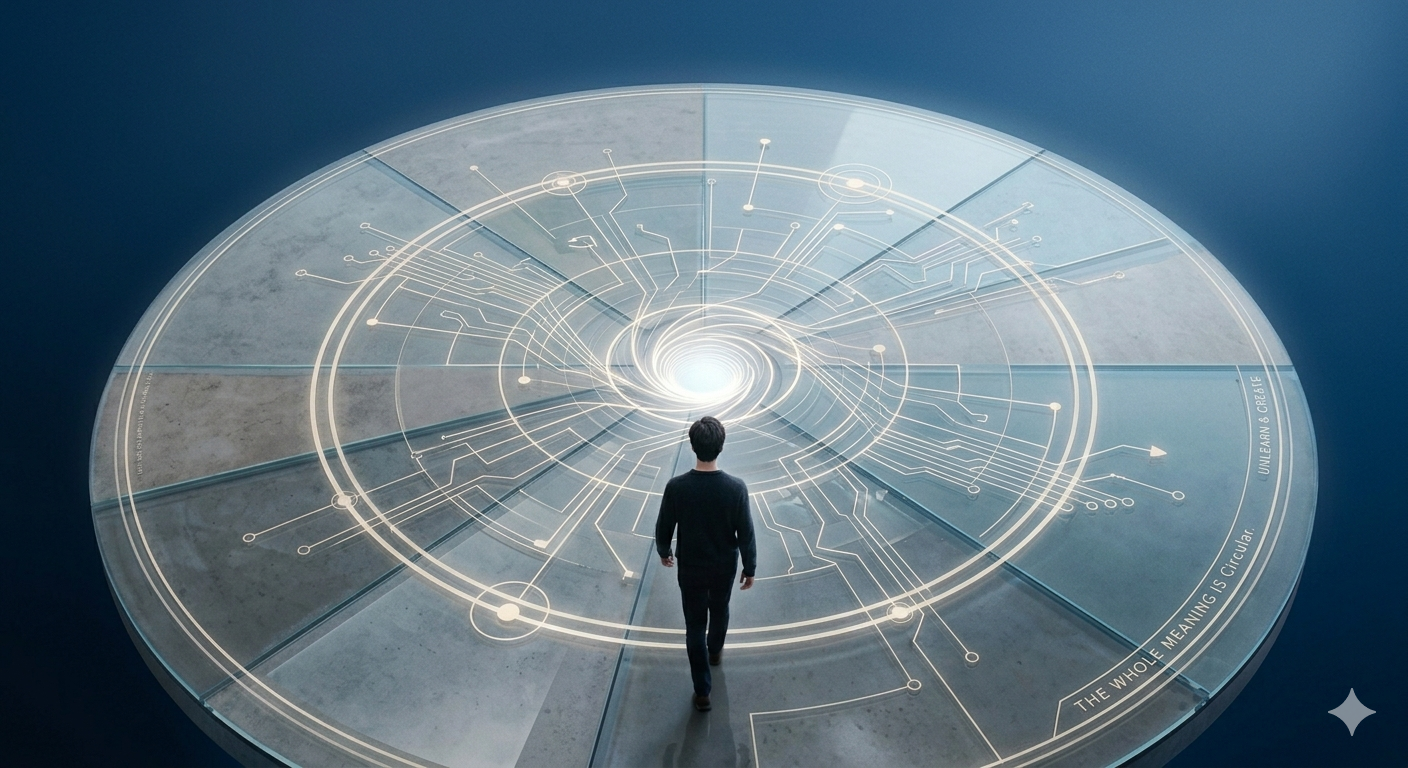
How to Reclaim your mind: Unlearn rules and ignite creativity.
The Creator You Killed Inside Yourself
There was a strange student at a well known university.
When he was young, his biological mother gave him up to another family. Both families shared one goal get him into university. He got in. But the traditional way things were taught there? He wasn't impressed.
So he dropped out.
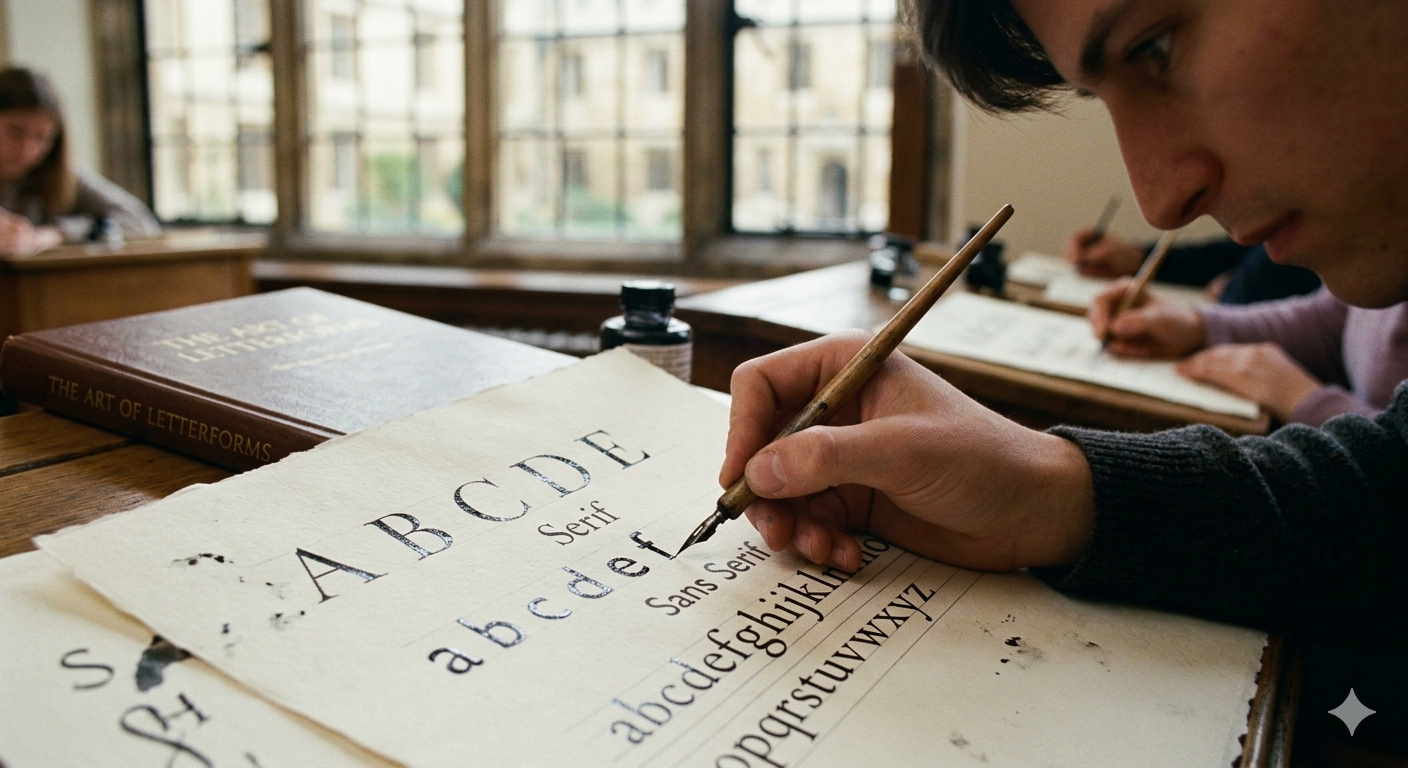
And instead of attending lectures, he started quietly sitting in on a calligraphy class studying the art of letterforms. Serif. Sans-serif. The way a single character could carry weight, personality, and meaning depending on how it was shaped.
He had no idea why he was doing it. No plan. No career goal. No expectation of a return. He just found it fascinating and kept going.
About ten years passed.
Then the world was about to change. The era of room sized computers was ending. For the first time in history, a personal computer one that a normal person could actually use was about to be built.
And the student who had once walked away from his degree to study letterforms? He poured everything he'd quietly learned into the operating system of the first Macintosh. Multiple fonts. Beautiful typography. A machine that didn't just work it felt like it was designed by someone who cared.
That was how Steve Jobs and Apple began.
I started with that story for a reason. Not because Steve Jobs is famous. But because what he did taking something he learned with no agenda and using it to create something the world had never seen is the clearest proof of what creativity actually is.
And most of us have a completely wrong understanding of it.
We've been taught that creativity belongs to creative people. Artists. Designers. Musicians. People who do creative things. But here's what nobody tells you every single person alive was born creative. And most of us killed that part of ourselves before we even noticed it was there.
Think About a Child
Think about a small child. Or your pet.
Notice the freedom. The curiosity about everything. The way they learn things nobody taught them. The way they experience the world completely, without filters. The way they understand emotions is sometimes better than we do, without being told how.
That's not a skill. That's a natural state.
But watch what happens between the ages of 5 and 10.
The rules arrive. Don't do that. Do it this way. That's wrong. This is right. Structure. Schedules. Syllabuses. The child stops exploring and starts performing for grades, for approval, for the image of a "good student."
Ken Robinson spent years researching this. His 2006 TED Talk "Do Schools Kill Creativity?" became the most-watched TED Talk in history. Over 72 million views. His finding was simple and devastating:
98% of children test at genius-level creativity at age 5. By the time they're 25, that number drops to 2%.
The variable? School.
The Real Problem Isn't Knowledge
Here's where most people get confused. The problem isn't that we learn things. Knowledge isn't the enemy.
The problem is what happens when knowledge stops being a tool and starts becoming an identity.
When a child grows up being told what's right and what's wrong what to think, how to think, which answers are acceptable they don't develop a reasoning mind. They develop a storage unit. A hard drive full of other people's conclusions.
And that storage unit becomes their world. Everything they see, they filter through it. Every new idea gets measured against what's already in there. Anything that doesn't fit gets rejected not because it's wrong, but because it's unfamiliar.
That's not thinking. That's retrieval.
The real tragedy is that most people don't notice it happening. They move through life believing they're thinking for themselves when actually they're running on inherited software that was installed before they were old enough to consent.
The Prison Is the Language Itself
There's a film called "Arrival". Most people who watched it remember it as a beautiful sci-fi story about aliens and time. But there's something hidden inside it that most people walk past.
The aliens in that film don't communicate the way we do. Human language is linear a letter becomes a word, a word becomes a sentence, a sentence becomes a story. One thing at a time. Sequential. A → B → C. That's how we think. That's how we understand the world.
The alien language is circular. The entire meaning exists all at once not built piece by piece, but experienced as a whole.
And here's the part that matters:
When the translator learns that language something shifts in her mind. She starts experiencing time differently. Not linearly. She sees what's coming. Past and future stop being separate things.
The language changed how she thought. And how she thought changed what she could see.
Now think about that in the context of your own mind.
The knowledge system we're given is linear. Facts build into beliefs. Beliefs build into a worldview. And then we use that worldview to filter everything new that comes in. We can only see what our language allows us to see.
That's the real prison. Not school. Not society. Not other people.
The structure of the thinking itself.
Creativity isn't just about making something new. It's about being able to think in a way that linear knowledge hasn't already mapped out. It's the moment you step outside the sentence and see the whole thing at once.
The Ones Who Changed the World
Here's something interesting about the people who changed history.
Study the childhoods of the world's greatest creators and you'll find a pattern. Most of them struggled deeply inside traditional education systems. Many were told they were failures, difficult, or simply wrong.
But because of that, their real learning happened alone. With themselves. With the world around them. Without someone telling them what conclusions to reach.
That's where self knowledge comes from. Not from memorizing other people's answers but from asking your own questions and sitting with the uncertainty long enough for something real to emerge.
That's why Steve Jobs could see what others couldn't. That's why the most original things ever made carry a feeling inside them a sense of something alive that mass-produced knowledge can't replicate.
Knowledge as a Tool Not a God
The Dalai Lama once said:
"Don't use Buddhism to become a good Buddhist. Use Buddhism to become the best version of the person you already are."
That's the whole thing, right there.
A philosophy or any body of knowledge becomes dangerous the moment you stop using it and start worshipping it. When you memorize it. When you defend it. When you let it decide who you are.
Buddhism. Science. Religion. Education. Political ideology. It doesn't matter what the system is. The moment it stops being something you use and becomes something that uses you, the creator inside you goes quiet.
Unlearn Something Today
The most underrated skill in the world isn't learning. It's unlearning.
Being willing to say: "What I knew before I've outgrown it. Something better has arrived. I'm letting the old thing go."
Most people can't do that. Because their knowledge isn't something they have. It's something they are. Letting go of it feels like dying.
But here's the thing the greatest things ever made weren't made by the most educated people. They were made by people who knew enough to build, and knew themselves well enough to trust what they were building.
The difference between a knowledge storage unit and a creator is simple:
One uses what they know to stay where they are. The other uses what they know to go somewhere nobody has been before.
A Note on Balance
History shows us that many great creators emerged outside traditional education through self study, curiosity, and going their own way.
But that doesn't mean the system is the enemy.
In today's world fast-moving, competitive, constantly updating the knowledge and opportunities that formal education and higher learning provide are genuinely valuable. The question was never whether to use the system. The question is how you use it.
Use it as a tool to find yourself not as a definition of who you are. Let it sharpen you, not shape you. The person who walks through the education system with their curiosity intact, their questions alive, and their own voice still present, that person doesn't just survive the system. They use it as a launchpad.
The exploration of who you truly are becomes easier, not harder, when you bring both self knowledge and the world's knowledge together.
The Creator Is Still In There
You were born creative. Completely, naturally, without effort.
What happened after that the rules, the grades, the expectations, the voices telling you what you should be that wasn't education. That was construction. Someone else built a version of you and handed it back to you as if it were the original.
It wasn't.
The original is still in there.
Quieter now. Maybe buried under years of being told to be realistic. But still there.
The question isn't whether you're creative.
The question is whether you're willing to let go of the version of yourself that was built for you and find out who you actually are.
Say goodbye to the traditional human that knowledge constructed. It's time to give life to the universal creator inside you.
"Newness" is not absolute it is defined relative to existing knowledge. As knowledge evolves and outdated frameworks are unlearned, our definition of "new" also evolves. Creation is not separate from change it is the expression of change through updated understanding.
The flow of the universe exists within change itself.