How to Improve Communication Skills in Everyday Situations
Introduction
Communication is one of the most essential life skills that influences almost every aspect of human experience. From personal relationships and academic success to workplace performance and social interactions, the ability to communicate effectively determines how well we connect with others and how successfully we express our ideas. In everyday situations, communication is not limited to formal conversations; it includes small interactions such as greeting a neighbor, speaking with a colleague, ordering food, or resolving misunderstandings. Many people assume communication is a natural talent, but in reality, it is a skill that can be developed and refined with consistent practice. Improving communication skills requires awareness, patience, and a willingness to change habits that may be limiting clarity and confidence.
This article explores practical and meaningful ways to improve communication skills in everyday situations, helping individuals become more confident, clear, and effective in their interactions.
Understanding the Importance of Everyday Communication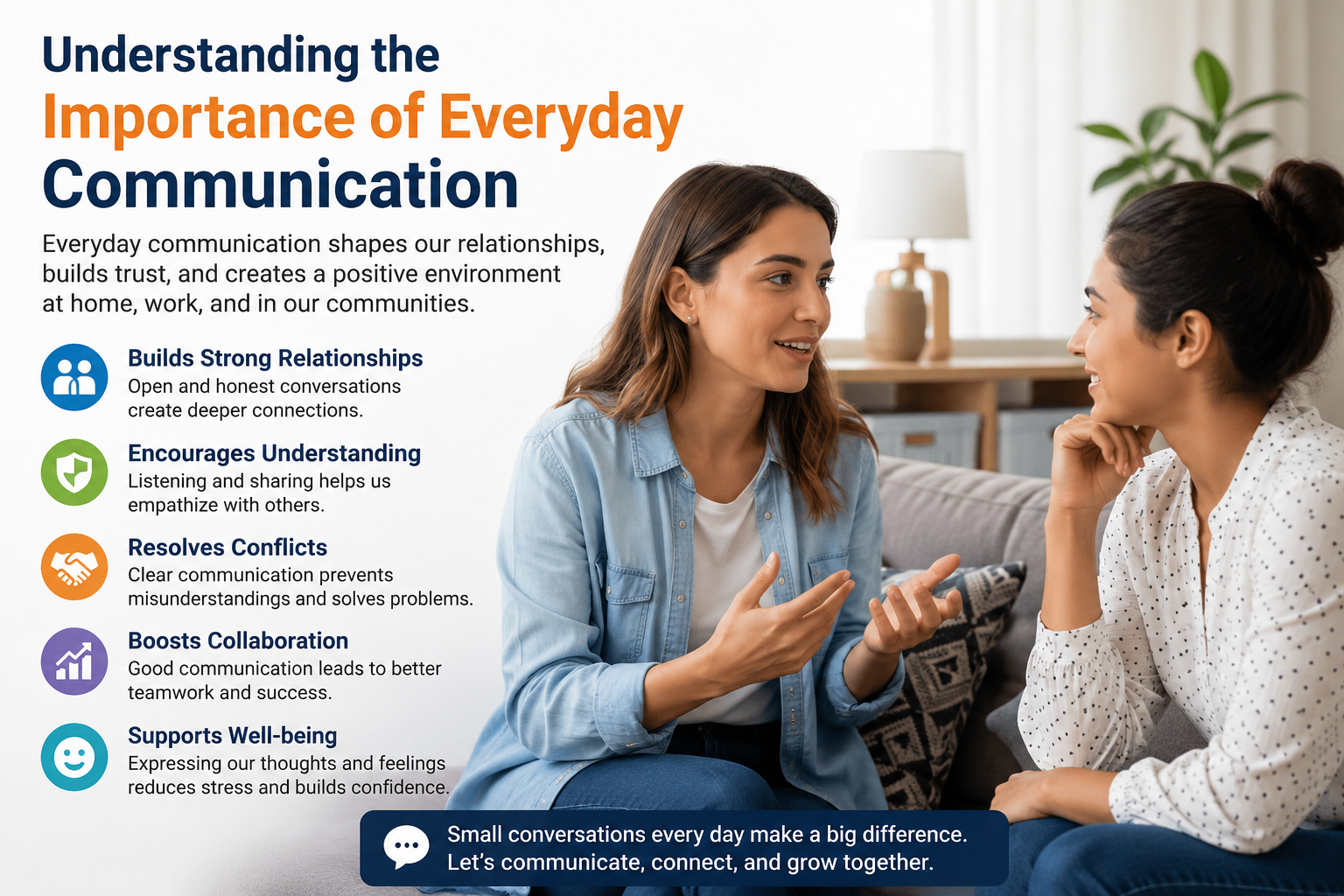
Everyday communication forms the foundation of human relationships. Even the simplest conversation carries meaning, emotion, and intention. When communication is effective, it builds trust, reduces misunderstandings, and strengthens connections. On the other hand, poor communication can lead to confusion, conflict, and emotional distance.
In daily life, communication is not just about speaking; it is equally about listening, observing, and responding appropriately. For example, a short conversation with a cashier or a teacher may seem minor, but it reflects your ability to express yourself clearly and respectfully. Over time, these small interactions shape how others perceive you and how confidently you navigate the world.
Understanding this importance is the first step toward improvement because it encourages mindfulness in every interaction rather than only in formal settings.
Developing Active Listening Skills
One of the most overlooked aspects of communication is listening. Many people focus on what they want to say next instead of truly understanding what the other person is expressing. Active listening means paying full attention to the speaker, understanding their message, and responding thoughtfully.
In everyday situations, active listening can be practiced by maintaining eye contact, nodding to show understanding, and avoiding interruptions. It also involves mentally processing what is being said rather than thinking about unrelated thoughts.
When people feel heard, they are more likely to respond positively. This improves relationships and reduces misunderstandings. Active listening also helps you gather better information, which leads to more meaningful responses and better decision-making in conversations.
Improving Clarity and Simplicity in Speech
Clear communication is often simple communication. Many misunderstandings occur because people use overly complex words, long explanations, or unclear expressions. In everyday situations, clarity is more valuable than complexity.
To improve clarity, it is important to organize thoughts before speaking. Even a brief pause before responding can help structure your message. Using simple language, short sentences, and direct expressions ensures that your message is easily understood.
For example, instead of overexplaining a simple request, saying exactly what you need in a straightforward manner reduces confusion. Clarity also involves avoiding unnecessary filler words and staying focused on the main point of the conversation.
Building Confidence in Communication
Confidence plays a major role in how effectively we communicate. People who lack confidence often struggle to express their thoughts, even when they have valuable ideas. Building confidence does not happen overnight; it requires practice and gradual exposure to different communication situations.
One effective way to build confidence is by engaging in small daily conversations. Speaking to familiar people, participating in group discussions, or asking questions in public settings helps reduce hesitation over time. Preparation also boosts confidence; knowing what you want to say makes communication smoother.
Body language is another important aspect of confidence. Standing or sitting upright, maintaining eye contact, and using natural gestures help convey assurance and openness, even when you feel nervous internally.
Enhancing Non-Verbal Communication
Communication is not only verbal; a large part of it is non-verbal. Facial expressions, gestures, posture, and tone of voice all contribute to how a message is interpreted. In everyday situations, non-verbal cues often speak louder than words.
For example, a friendly smile can make a conversation more welcoming, while crossed arms may appear defensive. Similarly, a calm and steady tone of voice can help convey confidence and sincerity. Being aware of these signals helps ensure that your non-verbal communication matches your spoken words.
Improving non-verbal communication requires self-awareness and observation. Watching how others respond to your body language can help you adjust and improve over time.
Practicing Emotional Awareness
Effective communication is closely connected to emotional intelligence. Understanding your own emotions and recognizing the emotions of others helps you respond appropriately in different situations. Emotional awareness prevents impulsive reactions and promotes thoughtful communication.
In daily interactions, emotions can influence tone, word choice, and behavior. For instance, frustration may lead to harsh language, while stress may reduce patience. Learning to manage these emotions helps maintain calm and respectful communication.
Practicing emotional awareness also involves empathy—putting yourself in the other person’s position. When you understand how someone else feels, your responses become more considerate and effective.
Adapting Communication to Different Situations
Not all communication situations are the same. Speaking with a friend is different from speaking with a teacher, employer, or stranger. Adapting your communication style based on the situation is an important skill.
In formal situations, communication should be respectful, structured, and clear. In informal settings, it can be more relaxed and conversational. Understanding the context helps you choose appropriate words, tone, and behavior.
Adaptability also involves understanding cultural and social differences. People may interpret messages differently based on their background, so being sensitive to these differences improves overall communication effectiveness.
Overcoming Fear of Mistakes
Many people hesitate to communicate because they fear making mistakes. This fear can limit expression and reduce opportunities for growth. However, mistakes are a natural part of learning communication skills.
In everyday life, every conversation is a learning experience. Mispronouncing a word, forgetting a point, or misunderstanding someone does not mean failure; it simply provides feedback for improvement. The more you communicate, the more confident and skilled you become.
Accepting mistakes as part of the process reduces anxiety and encourages more open and frequent communication.
Practicing Regular Communication
Like any skill, communication improves with practice. The more you engage in conversations, the more natural and effective your communication becomes. Everyday situations provide countless opportunities to practice, such as speaking with friends, asking for directions, participating in discussions, or even making small talk.
Consistency is key. Even short daily interactions contribute to long-term improvement. Over time, you begin to notice better clarity, improved confidence, and stronger connections with others.
Practicing reflection after conversations can also help. Thinking about what went well and what could be improved strengthens awareness and accelerates growth.
Conclusion
Improving communication skills in everyday situations is a continuous journey that requires patience, awareness, and consistent effort. It is not about perfection but about progress. By focusing on active listening, clarity, confidence, emotional awareness, and adaptability, anyone can significantly enhance their ability to communicate effectively.
Every interaction, no matter how small, is an opportunity to improve. Whether speaking to a friend, colleague, or stranger, effective communication helps build stronger relationships, reduce misunderstandings, and increase personal confidence. Over time, these improvements create a more connected, expressive, and successful way of interacting with the world.