Simple Daily Money-Saving Habits
That Build Long-Term Financial Security Managing money wisely does not always require earning a higher income or making drastic lifestyle changes. In fact, many people improve their financial situation by adopting small daily habits that gradually lead to significant savings over time. Consistent financial discipline can help reduce stress, build emergency funds, eliminate debt, and create a stronger foundation for future goals. Whether you are saving for a home, education, retirement, or simply seeking greater financial stability, simple daily money-saving habits can make a remarkable difference.
Understanding the Importance of Daily Savings
Saving money is often viewed as a difficult task because many people focus on large financial sacrifices. However, financial success is usually built through small decisions made every day. Spending a little less on unnecessary items, tracking expenses, and making smarter purchasing choices can accumulate into substantial savings over months and years.Daily savings habits create awareness about where money goes and help individuals develop a healthier relationship with spending. The goal is not to eliminate enjoyment from life but to ensure that spending aligns with personal priorities and long-term objectives.
Track Your Daily Expenses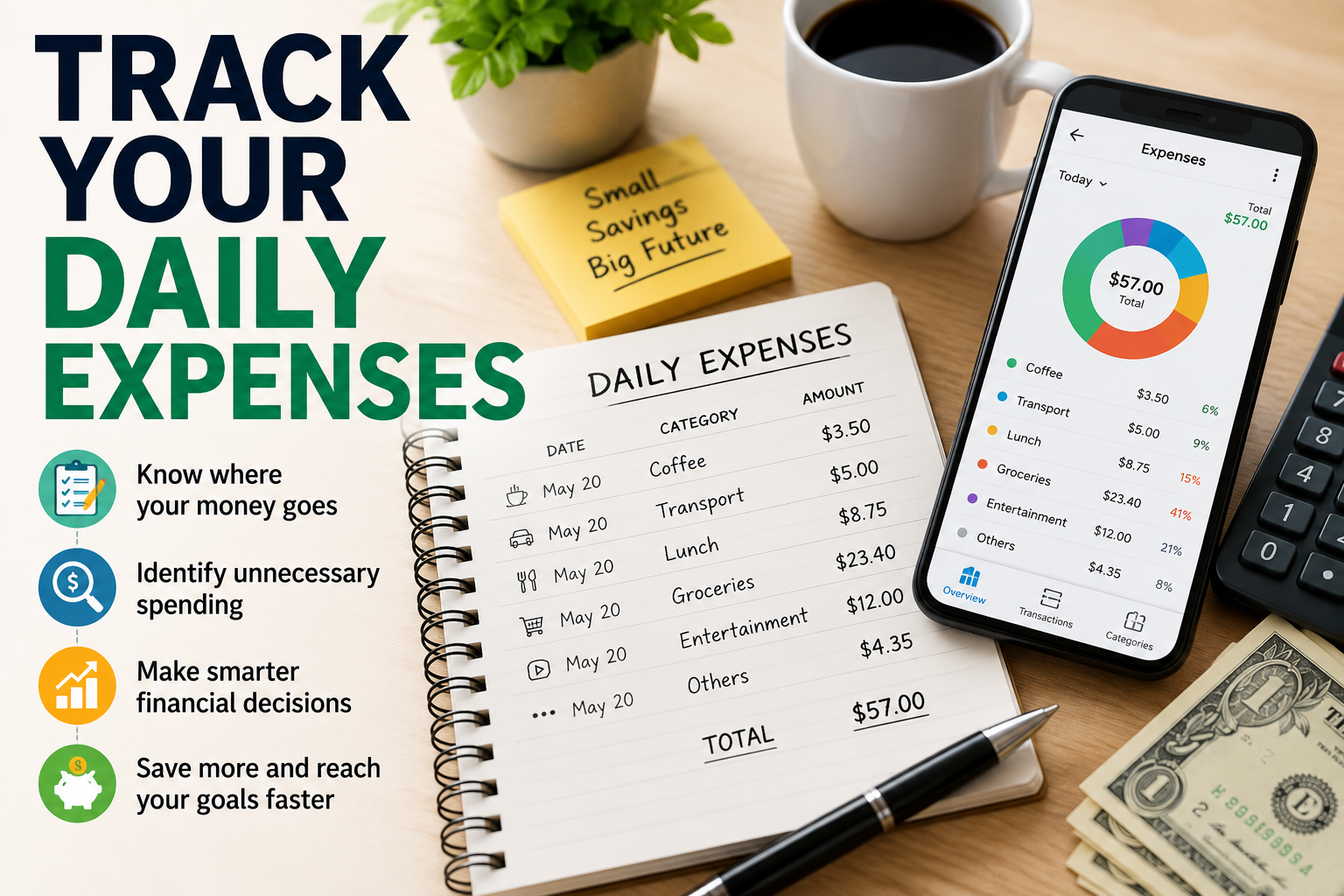
One of the most effective ways to save money is to understand exactly how much you spend each day. Many people underestimate their daily expenditures because small purchases seem insignificant at the moment.Keeping track of every expense helps reveal spending patterns and identify areas where money is being wasted. Whether using a notebook, spreadsheet, or budgeting application, recording purchases creates financial awareness and accountability.After tracking expenses for a few weeks, you may notice recurring costs such as daily coffee purchases, unnecessary online shopping, or excessive spending on convenience items. Recognizing these habits allows you to make informed adjustments that improve your financial situation.
Create and Follow a Budget
A budget serves as a financial roadmap. It helps allocate income toward essential expenses, savings, investments, and personal enjoyment while preventing overspending.Creating a budget begins with listing all sources of income and categorizing monthly expenses. Essential expenses such as housing, utilities, food, transportation, and insurance should be prioritized. Once necessities are covered, funds can be allocated toward savings and discretionary spending.A realistic budget should be flexible enough to accommodate unexpected expenses while maintaining a focus on long-term financial goals. Regularly reviewing and adjusting the budget ensures that it remains effective as circumstances change.
Avoid Impulse Purchases
Impulse buying is one of the most common reasons people struggle to save money. Advertisements, promotions, and emotional triggers often encourage unnecessary spending.Before making a purchase, consider whether the item is truly needed. A useful strategy is the 24-hour rule, which involves waiting one day before buying non-essential items. This delay provides time to evaluate whether the purchase adds genuine value.Many impulse purchases lose their appeal after a brief waiting period. By resisting the urge to buy immediately, you can save a considerable amount of money over time.
Cook More Meals at Home
Dining out and ordering takeout can quickly consume a significant portion of a household budget. Preparing meals at home is generally much less expensive and often healthier.Planning meals for the week allows you to purchase ingredients efficiently and reduce food waste. Cooking larger portions and using leftovers for future meals further increases savings.Home cooking also provides greater control over nutrition and portion sizes. Even replacing a few restaurant meals each week with homemade alternatives can result in substantial annual savings.Shop with a ListShopping without a plan often leads to unnecessary purchases. Whether visiting a grocery store or shopping online, having a list helps maintain focus on essential items.Before shopping, take inventory of what you already have and prepare a list based on actual needs. Sticking to the list minimizes impulse purchases and reduces the likelihood of buying duplicate items.This simple habit encourages mindful spending and ensures that every purchase serves a purpose.
Cancel Unused Subscriptions
Subscription services have become increasingly common, ranging from streaming platforms and fitness applications to software memberships and digital publications. While each subscription may appear affordable individually, the combined monthly cost can be significant.Review all active subscriptions regularly and identify services that are rarely used. Canceling unnecessary memberships immediately frees up money that can be redirected toward savings or debt repayment.Even a few canceled subscriptions can generate meaningful annual savings without affecting overall quality of life.
Compare Prices Before Buying
Taking a few minutes to compare prices can result in significant savings. Different retailers often offer the same products at varying prices, and discounts may be available through promotions or seasonal sales.Online comparison tools make it easier than ever to evaluate options before purchasing. Looking for alternative brands, checking reviews, and comparing product features can help ensure that you receive the best value for your money.Making informed purchasing decisions reduces unnecessary spending and increases overall financial efficiency.Use Cashback Programs and RewardsCashback applications, loyalty programs, and rewards credit cards can help reduce everyday expenses when used responsibly.Many retailers offer loyalty points that can be redeemed for discounts or free products. Cashback platforms return a percentage of spending, effectively lowering the cost of purchases.While rewards can be beneficial, it is important not to spend extra money simply to earn points. The greatest benefit comes from earning rewards on purchases that would have been made regardless.
Set a Daily Spending Limit
Establishing a daily spending limit encourages conscious financial decisions. Knowing how much money is available for discretionary spending each day helps prevent overspending and supports budgeting goals.Daily limits create a practical framework for managing expenses while maintaining flexibility. Small savings achieved through daily discipline accumulate significantly over time.For example, reducing daily discretionary spending by just a few dollars can result in hundreds or even thousands of dollars saved annually.
Automate Small Savings Transfers
Automation simplifies saving by removing the need for constant decision-making. Setting up automatic transfers from a checking account to a savings account ensures consistent contributions.Even small automated transfers can have a substantial impact over time. Saving a modest amount each day, week, or month gradually builds an emergency fund and strengthens financial security.Automation also reduces the temptation to spend money before setting it aside for savings.
Reduce Energy Consumption
Lowering household energy usage benefits both the environment and personal finances. Small actions such as turning off lights, unplugging unused devices, and using energy-efficient appliances can reduce utility bills.Adjusting thermostat settings, maximizing natural light, and using appliances during off-peak hours can further increase savings.Although individual reductions may seem minor, consistent energy-conscious behavior contributes to meaningful long-term cost savings.
Review Financial Statements Regularly
Regular financial reviews help identify unnecessary expenses, billing errors, and opportunities for improvement.Examining bank statements and credit card transactions provides insight into spending habits and highlights recurring costs that may no longer be necessary.Monthly reviews encourage accountability and ensure that financial goals remain a priority. They also provide an opportunity to celebrate progress and adjust strategies when needed.
Build an Emergency Fund
An emergency fund serves as a financial safety net during unexpected situations such as medical emergencies, vehicle repairs, or temporary loss of income.Without emergency savings, individuals often rely on credit cards or loans, which can create additional financial challenges. Consistently saving small amounts each month gradually builds a fund that provides peace of mind and financial resilience.Most financial experts recommend maintaining enough savings to cover several months of essential living expenses.Develop a Long-Term Financial Mindset Successful saving requires looking beyond immediate gratification and focusing on future benefits. Every dollar saved today contributes to greater financial flexibility tomorrow.Developing a long-term mindset involves setting clear goals, tracking progress, and understanding the value of delayed gratification. Whether saving for retirement, education, travel, or home ownership, long-term goals provide motivation to maintain positive financial habits.The most effective savers understand that wealth is often built gradually through consistent actions rather than sudden changes.
The Compounding Effect of Small Savings
One of the most powerful concepts in personal finance is compounding. Small amounts saved consistently can grow significantly over time when combined with interest or investment returns.For example, saving a small amount each day may not seem impactful initially. However, over months and years, those contributions accumulate and create opportunities for larger investments and financial growth.Consistency matters more than perfection. Even modest savings habits can produce impressive results when maintained over the long term.
Hidden Truth Behind Supermarket Discount Offers and Pricing Tricks
For example, promotions like “Buy 1 Get 1 Free” may seem like a big saving, but the original price of the product is often increased so that the cost of both items is already included in the offer. Similarly, “Up to 70% off” advertisements usually apply only to a few selected products, while most items in the store have much smaller discounts. In some cases, only specific brands or sizes are included in the offer, so customers may not actually benefit much when shopping normally.
Another common situation is when the price on the shelf does not match the billing system, leading to customers being charged more than expected. Offer packs may also contain reduced quantities, meaning the price per unit is higher even though it looks cheaper. Sometimes combo deals encourage people to buy extra items they do not need, which increases total spending. In addition, hidden taxes, membership requirements, or service charges can be added at checkout, making the final bill higher. Because of all these factors, the “big offer” we see in supermarkets does not always translate into real savings.
Conclusion
Saving money does not require extreme sacrifices or a dramatic change in lifestyle. Simple habits such as tracking expenses, creating a budget, avoiding impulse purchases, cooking at home, shopping with a list, canceling unused subscriptions, and reducing energy consumption can significantly improve financial health. By automating savings, reviewing finances regularly, and maintaining a long-term perspective, individuals can steadily build financial security and achieve their goals.The journey toward financial freedom begins with small daily choices. Each responsible financial decision contributes to a stronger future, proving that consistent habits are often more powerful than major one-time actions. By adopting these practical money-saving strategies, anyone can create lasting financial stability and enjoy greater confidence in managing their finances.